When people start working on their nutrition, they usually run into the same problem fast: too much information, not enough clarity. Who should you use and what’s the difference between a dietitian vs nutritionist?
Social media is full of “experts,” but not all of them have the same training, credentials, or ability to actually help you.
The terms nutritionist, dietitian, and sports dietitian get used interchangeably. We believe that’s a mistake.
If you’re trying to improve your health, recover from injury, or perform better, choosing the wrong person can waste months.
This guide breaks it down simply so you can choose the right person.
Nutritionist
A nutritionist is a general term for someone who provides nutrition advice.
- Education can range from a PhD to a weekend course to owning a social media account
- The title is not regulated in many states
- Common roles:
- General healthy eating guidance
- Weight loss coaching
- Lifestyle advice
The problem
There’s no consistent standard.
Some are excellent. Some are guessing.
Most cannot provide medical nutrition therapy, which matters if you’re dealing with fatigue, injury, or health conditions.
Registered Dietitian (RD / RDN)
A Registered Dietitian is a licensed healthcare professional.
They are guaranteed to have education behind their recommendations.
Requirements:
- Bachelor’s degree (now Master’s required starting 2024)
- ACEND-accredited program
- 1000+ hours supervised clinical internship
- Pass national board exam (CDR)
- Ongoing continuing education
- Must follow a professional code of ethics
What they actually do:
- Medical Nutrition Therapy (MNT)
- Disease prevention and management
- Evidence-based nutrition strategies
- Individualized planning based on physiology, not trends
Where they work:
- Hospitals
- Clinics
- Private practice
- Performance centers (like SPC)
Bottom line:
If you want reliable, evidence-based, individualized care, this is the standard.
Sports Dietitian
A sports dietitian is a Registered Dietitian who specializes in performance.
They have all the requirements of a Registered Dietitian, with an added understanding of sport-specific needs and fueling for exercise.
What they focus on:
- Fueling for training and competition
- Recovery and injury support
- Hydration strategies
- Body composition
- Preventing low energy availability
Where they work:
- Professional and collegiate sports
- Performance facilities
- High-level private practice
Why this matters:
If you train hard, deal with recurring injuries, or feel like your energy doesn’t match your output, a sports dietitian might be the missing piece you need.
Dietitian vs Nutritionist: What’s the Difference and Who to Choose
Nutritionist
- Basic guidance
- General lifestyle changes
- Lower cost entry point
- Risk: inconsistent quality
Dietitian
- Medical conditions (diabetes, heart disease, GI issues)
- Fatigue, recovery issues
- Evidence-based long-term change
- Best for most people
Sports Dietitian
- Athletes or active adults
- Injury recovery and training balance
- Performance and body composition
- Energy system issues (fatigue, burnout)
Where Most People Get It Wrong In The Dietitian vs Nutritionist Discussion
People don’t fail because they lack effort.
They fail because they mismatch the problem, the provider, and lack a clear process.
- Training harder with poor fueling leads to worse fatigue – something we call the training trap
- ‘Fixing’ diet without understanding matching your training plan to the actual requirements for your body – no performance change
- Treating symptoms instead of systems – issues that seems to come back over and over again
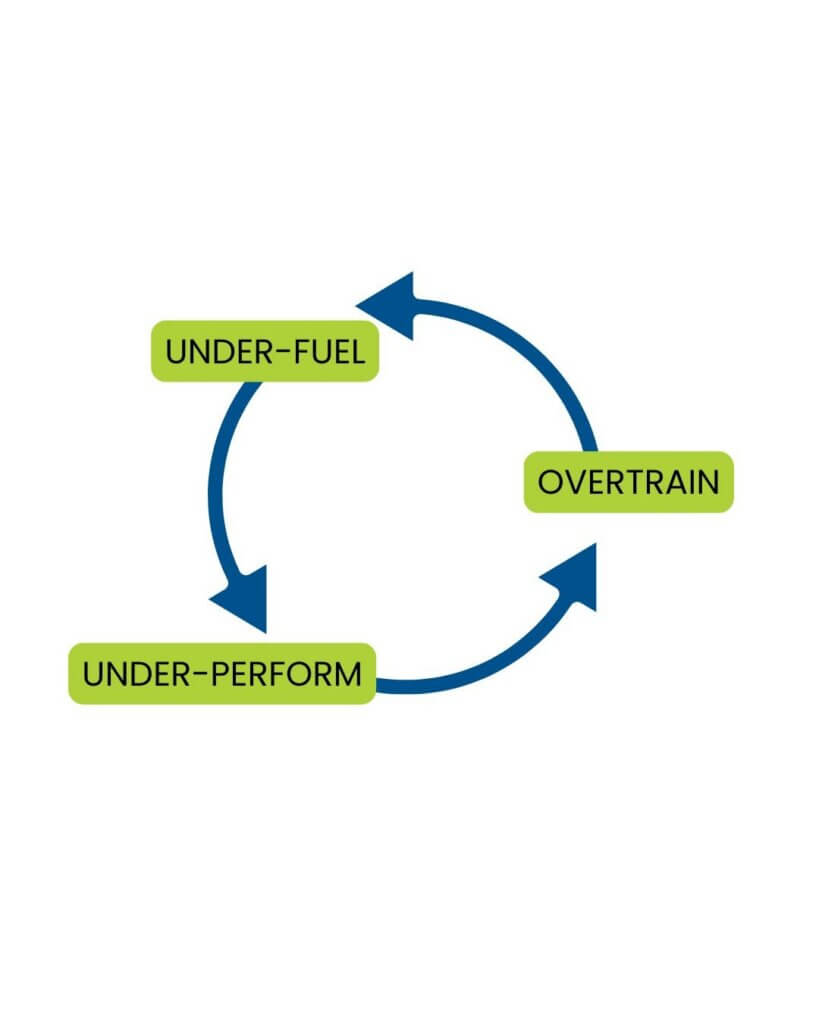
The Training Trap
If you’ve read this, you probably fall into this category:
Active, trying to do the right things, but something isn’t adding up.
That’s exactly where a dietitian becomes valuable.
How This Fits Into a Bigger System
Nutrition doesn’t exist on its own. It’s one input into how your body actually functions.
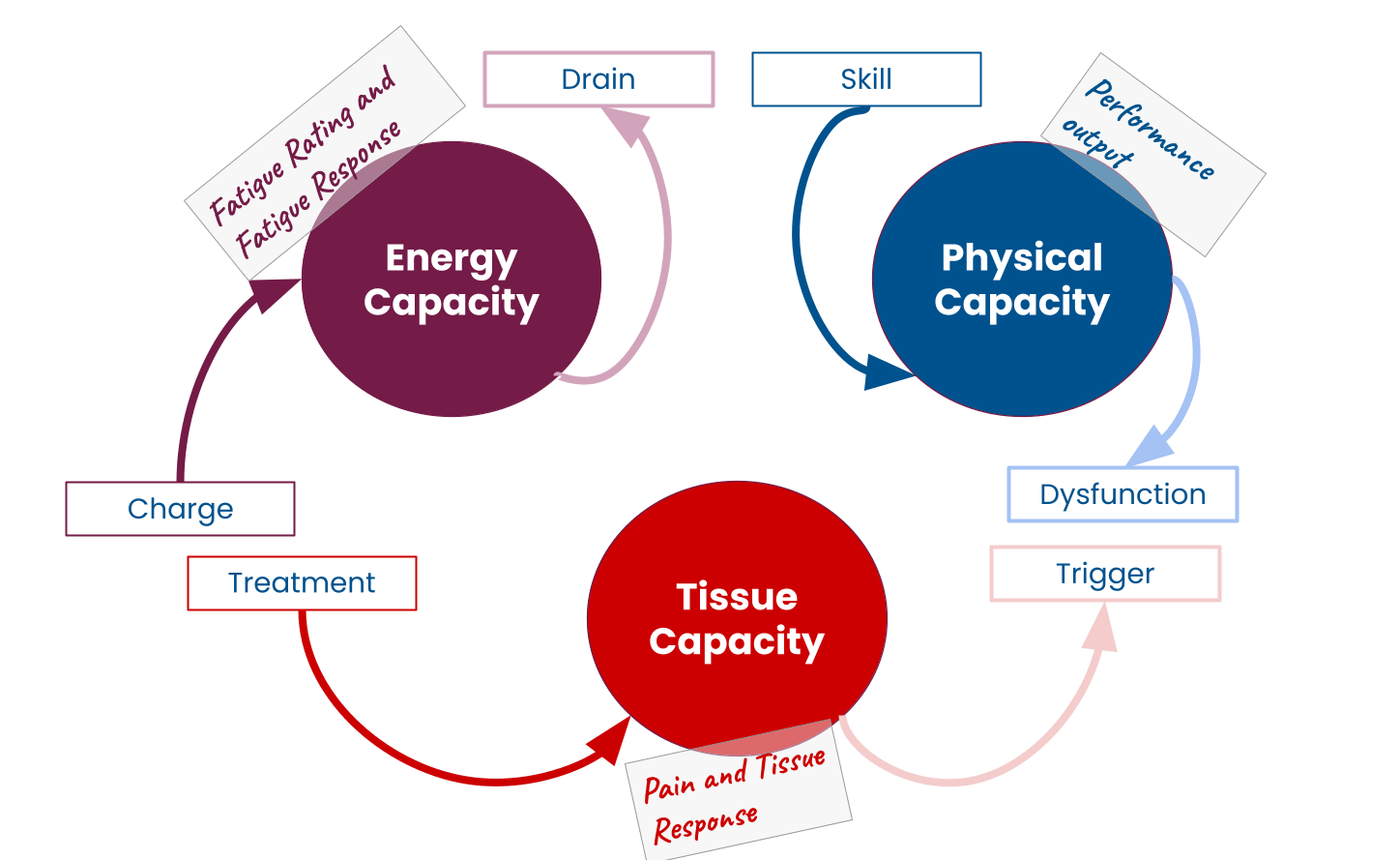
At SPC, we look at three interacting capacities:
- Energy capacity – what your body can sustain and recover from
- Tissue capacity – what your body can tolerate without breaking down
- Physical capacity – what you can actually do
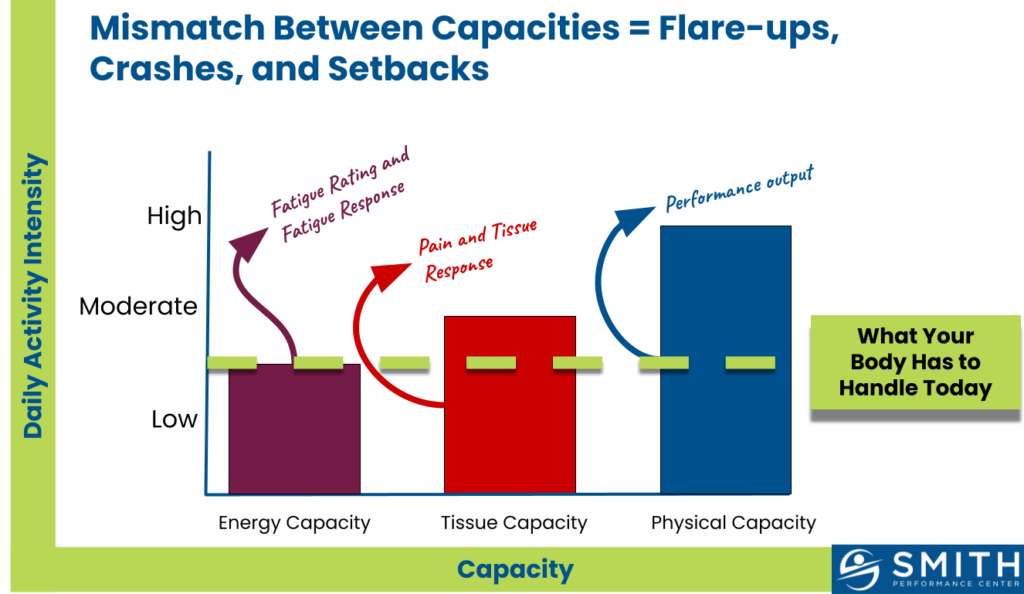
Most people focus on physical capacity.
They track workouts. They push performance. They try to do more.
The problem is that energy and tissue capacity don’t adapt at the same rate.
So what happens is predictable:
You improve what you can do faster than your body can support.
That creates a gap.
And when that gap shows up, it doesn’t look like a nutrition problem. It looks like:
- lingering fatigue
- inconsistent performance
- recurring pain
That’s why people get stuck.
They keep pushing the output side of the system without supporting the inputs.
Nutrition directly feeds energy capacity. Energy capacity supports recovery. Recovery allows tissue capacity to improve.
If that chain breaks, the system stops working.
That’s when you start seeing patterns like:
- Shin Pain from Running
- Fatigue in Active Adults
- Intense Soreness from Weight Training
Those aren’t random issues. They’re predictable outcomes when the system is out of balance.
Work With a Dietitian (SPC Approach)
Most nutrition advice fails for a simple reason:
It’s disconnected from what you’re actually doing.
Meal plans don’t adjust to training. Macros don’t account for injury. And when something goes wrong, there’s no system to respond.
At SPC, the dietitian isn’t working in isolation. They are part of a team.
They’re part of the same process that manages:
- rehab
- training
- progression
- symptom response
So instead of guessing, we’re constantly asking:
- Does your intake match your current output?
- Is your recovery keeping up with your training?
- Is your nutrition helping or limiting tissue response?
And then we adjust based on what actually happens.
Not what should happen.
This is where people usually realize the issue wasn’t effort.
It was a mismatch. It was a lack of process.
They were doing the right things, but the system wasn’t aligned.
Once that’s corrected, things tend to move quickly.
If you have questions about how our dietitian will work with you, understand your problem, and help me you toward your goals, read “How Can A Dietitian Help me? More Than A Meal Plan.“
Work With a Dietitian Who Understands the Full System
If you’re:
- training consistently but not recovering
- dealing with recurring injuries
- feeling fatigued despite doing the “right things”
- not getting the changes in your body that you want
The issue usually isn’t effort.
It’s a mismatch between your nutrition, training, and recovery.
At Smith Performance Center, nutrition is no longer separate from rehab or training. Jackie Hatchew MS RDN works alongside our physical therapists and coaches to maximize your progress and your health goals.
If you’re training consistently but keep getting hurt or stuck or missing nutrition goals, this is the next place to look.
Learn more about our Dietitian Services or schedule a Nutritional Initial Evaluation.