Ryan looked at his watch. It was 2 pm. The fatigue washed over him, like it seemed to every afternoon. Adjusting to sit more upright, he drank the remains of his energy drink.
His normal response to crushing fatigue was just to push through.
Ryan exercised with a busy work schedule. He ate what seemed like a balanced meal and drank water, but he did not feel more invigorated or awake, especially in the afternoon.
In his mind, this was aging and something to get used to.
Why “Doing Everything Right” Still Leaves You Exhausted
If you’re an active adult, fatigue can feel inevitable.
Your life is filled with responsibilities that do not care about your energy level. You push through work, family, and stress when you feel drained. Somewhere along the way, being tired just becomes “normal.” But according to Jackie Hatchew, MS, RD, fatigue is often not a motivation problem, a discipline problem, or an age problem.

Jackie Hatchew, MS, RD is a registered dietitian at Smith Performance Center who helps active adults address fatigue, recovery issues, and performance plateaus by improving energy capacity. Her approach focuses on practical, individualized fueling strategies that support training, injury recovery, and daily life without restriction or rigid diets.
It’s an energy capacity problem.
“I would say energy deficiency is a lot more common than people think,” Jackie explains. “Most people focus strictly on movement and physical exercise without understanding that you need the fuel to make that movement possible for your body.”
At Smith Performance Center, this realization is why nutrition is now a formal part of the system, not as dieting, but as fueling.
If you want to learn more about how our team solves your problem and gets you moving, read more about the SPC Phase System.
Energy Capacity: The Overlooked Limiter
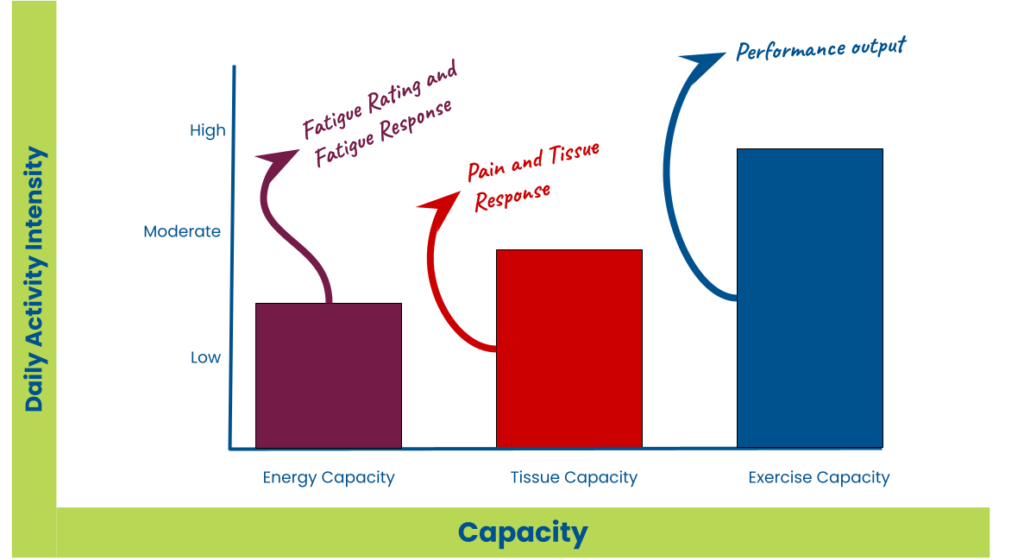
Most active adults understand physical capacity: the expression of your strength, endurance, speed, and coordination toward a task. It’s your ability to do something: exercise, run a marathon, play a sport, or a hike on the weekend. Some understand tissue capacity: your ability to do the activity without hurting.
Very few think about energy capacity.
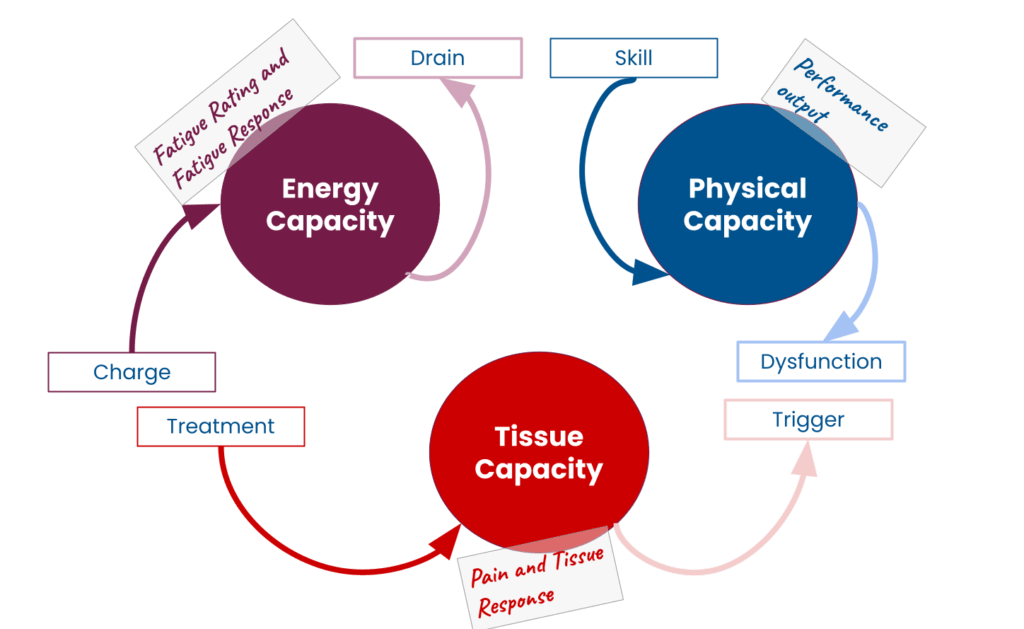
Energy capacity is your ability to support everything you’re asking your body to do. And not just workouts, but everything in life.
“Nutrition is a huge piece of that,” Jackie says. “If you’re not giving your body the building blocks that it needs—carbohydrates, proteins, fats, micronutrients—you’re either going to prolong recovery, plateau or decline.”
This shows up as:
- Midday crashes
- Poor recovery
- Lingering soreness
- Flat workouts
- Recurrent injuries
- Feeling unmotivated despite wanting to train
Or as Jackie puts it plainly:
“Under-fueling is the main problem that we see from a performance perspective.”
So when you think it’s a physical capacity problem and you just need to do more, sometimes it’s actually your energy capacity that is drained.
The Big Mistake: Training More While Eating Less
One of the most common traps active adults fall into is building exercise volume while restricting food.
“A very common misconception is that when people meet with a dietitian, they are going to get put on a diet,” Jackie says. “And in their mind, that means calorie restriction or eliminating their favorite foods. “
“That’s often not the case.”
This mistake is especially common in people who:
- Are trying to “lean out”
- Follow intermittent fasting without considering training load
- Increase running or gym volume without adjusting intake
- Assume fatigue means they need to “push harder”
The problem? Your body adapts.
“If you’re restricting calories for a long period of time, your body learns to need less food,” Jackie explains. “And in the long run, that results in burning fewer calories throughout the day. It has the exact opposite effect of what people are hoping to gain.”
Restriction doesn’t build capacity.
It may destroy it.
Fatigue Isn’t Just About Workouts
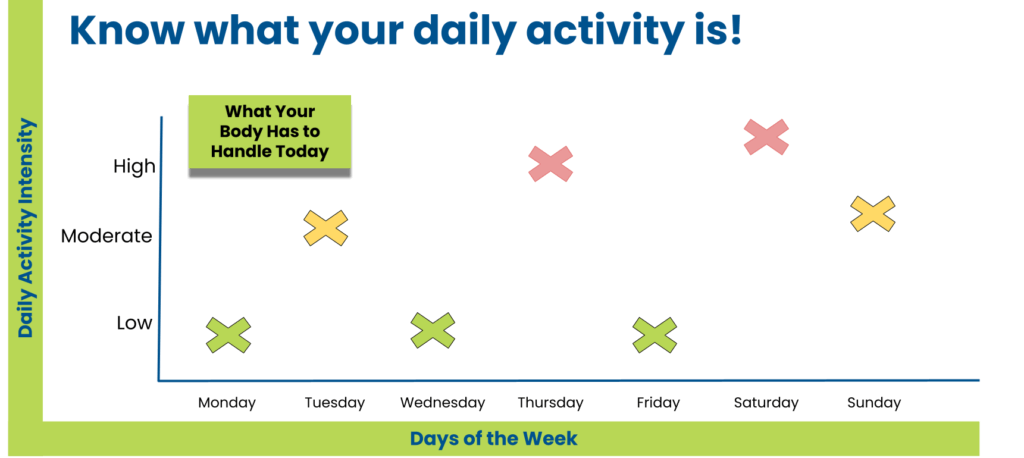
One of the most important parts of the SPC approach is that exercise stress isn’t the only stress that matters.
“The first thing I focus on is learning about people’s day-to-day lives and habits,” she says. “Sleep, hydration, stress levels, food patterns, weekday versus weekend—we need the whole picture.”
This matters because:
- Work stress counts
- Poor sleep counts
- Skipped meals count
- Long gaps between eating count
- Emotional stress affects fueling and recovery
“If you’re tired at 3 p.m. and feel like you have no motivation left,” Jackie says, “that’s a sign to look at energy capacity—not just discipline.”
In the same way our physical therapy team looks for triggers that reduce tissue capacity and cause pain, these drains from energy capacity add up especially if you are not charging back up.
Fueling vs Restriction: A Reframe That Changes Everything
Jackie’s philosophy is simple but clearly not what people expect:
“We don’t diet.”
Instead:
“Our goal is to improve your life by giving you energy throughout the day and maintaining food freedom.”
That includes an all-foods-fit approach.
“When you work with me, I’m never going to take out your favorite foods,” she says. “I’m always going to find a way to incorporate them because every food has some sort of benefit.”
Sometimes the benefit is nutritional. Sometimes it’s psychological sustainability.
“If I wasn’t able to eat dessert anymore, that would reduce a happiness component of my life,” Jackie explains. “And that would make me not want to see a dietitian.”
Sustainability beats perfection. And when you consider the requirements for long term success, this is what matters.
Signs It’s Time to Address Energy Capacity for Your Fatigue Issues
Seeing a dietitian isn’t about being “bad at nutrition.” It’s about removing blind spots.
Jackie recommends support when you notice:
- Energy crashes during the day
- Training plateaus despite consistency
- Slower-than-expected injury recovery
- Confusion from conflicting nutrition advice
- Feeling tired even when “doing everything right”
“Sometimes people just want clarity,” she says. “There’s so much information out there—it can be overwhelming.”
The Big Picture
Fatigue isn’t weakness nor should you assume it’s just aging.
It isn’t a character flaw.
It’s often a compromise in your energy capacity leading to a capacity mismatch.
At Smith Performance Center, nutrition is no longer separate from rehab or training. Jackie Hatchew works alongside our physical therapists and coaches to identify when fatigue is an energy capacity problem—and help rebuild it sustainably.
If you’re training consistently but feel flat, worn down, or stuck, this is the next place to look.
Schedule a Nutritional Initial Evaluation and get to the root cause of your fatigue.