Shin pain from running is one of the most common injuries runners face when increasing mileage or returning to training. When I started practice as a physical therapist, my first running client hobbled in due to ‘shin splints.’
At the time, I did not know that injured runners would be a focus area for my practice, but I distinctly remember the experience. She had run in college but stopped after graduation as she settled into her new career. When a friend convinced her to join a local running group a couple years later, she caught the running bug and her mileage jumped.
But a familiar problem returned from her competition days: shin splints.
When I saw her, the exam showed tenderness over the inside ankle tendons and bone of the lower leg. A few weeks of reduced running volume combined with tissue work and exercises to target force absorption resolved the symptoms and she quickly went on her way.
Fast forward 4 months, and she walked back into the office, clearly frustrated.
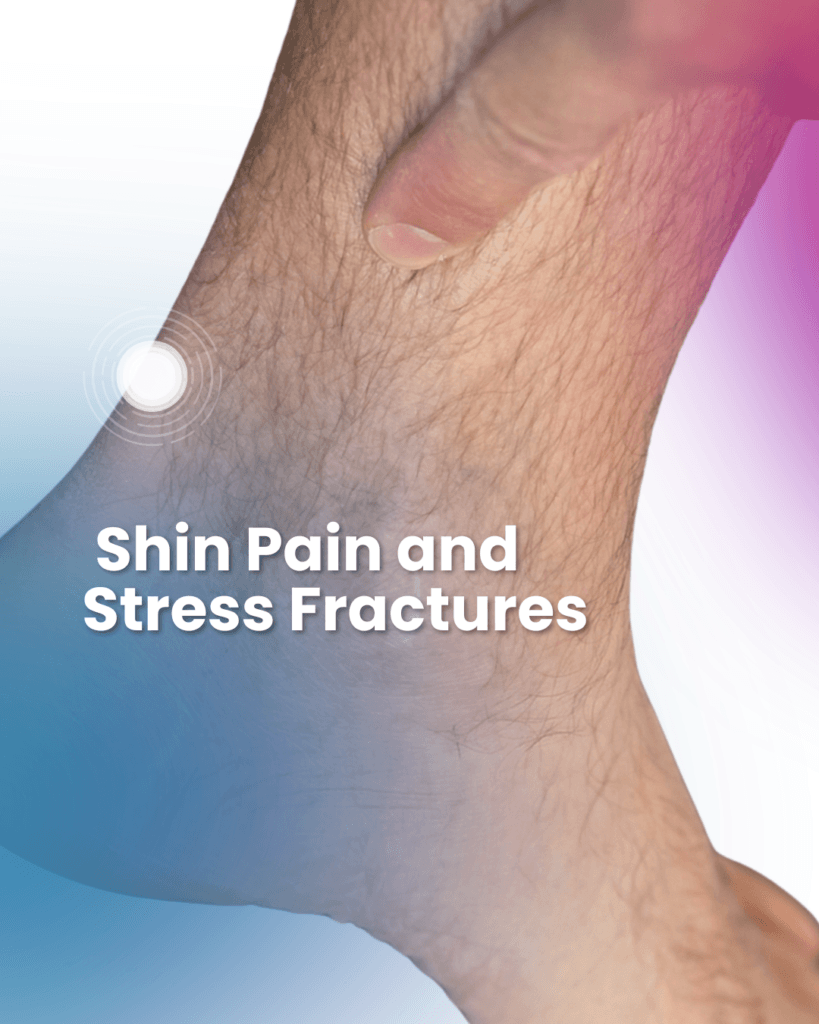
The shin splints returned, but now swelling appeared on the top of her foot with growing symptoms limiting her to a shuffle. She did not call it pain despite clear discomfort registering on her face. She called it tightness – one of my first lessons on how language changes in different groups for the same problem.
At this point, the exam indicated two stress fractures – one in the tibia and the other in the metatarsals – each painful on their own and worse together. Each step causes her to grimace.
She did not call it tightness anymore.
Most recurring running injuries are not caused by a single mistake.
They happen when different capacities in the body fall out of balance.
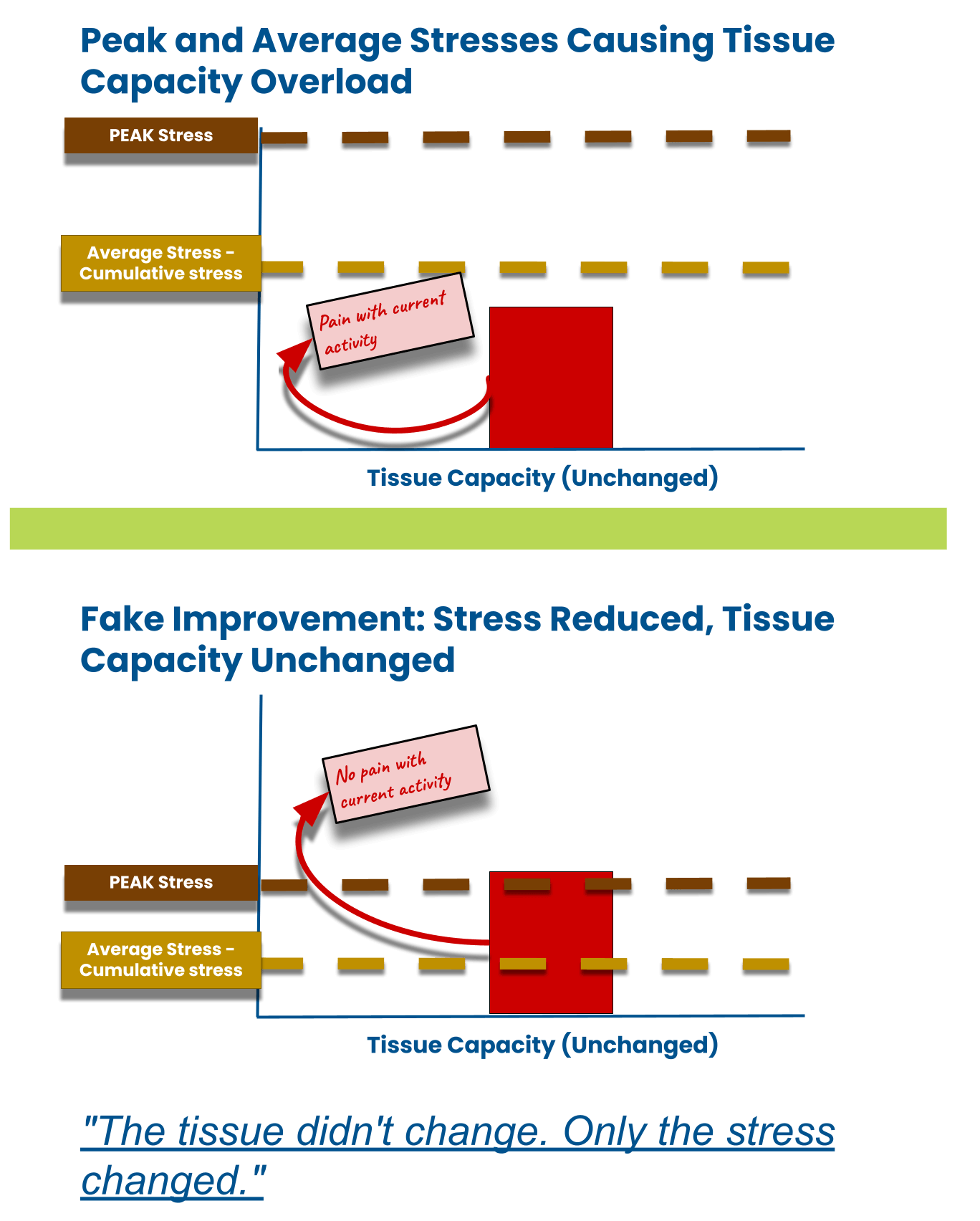
In this case of shin splints progressing to stress fractures, I missed the clear compromises she had in energy capacity and tissue capacity because of how well she could run. Over time, I learned the most common recommendation in managing running related injuries – taking time off from running – is often fake improvement. When fake improvement happens in rehab, pain reduction is not due to improved tissue capacity but simply a reduction in peak and average stresses. Recurrence skyrockets because the fundamental problem was never addressed.
We are going to go into the issues of recurrent shin splints and bone stress injuries and why capacity collapse is the real problem.
The Curse Of Recurring Shin Pain From Running: A Capacity Problem
As a new clinician, which matches the beliefs of many runners and coaches, my first thought was that shin splints were a normal part of returning to running. The typical explanation is muscle weakness or poor mechanics, usually followed by the comment, “It happens every time I start running.”
Unfortunately, this focus on the mechanics of running hides a capacity problem.
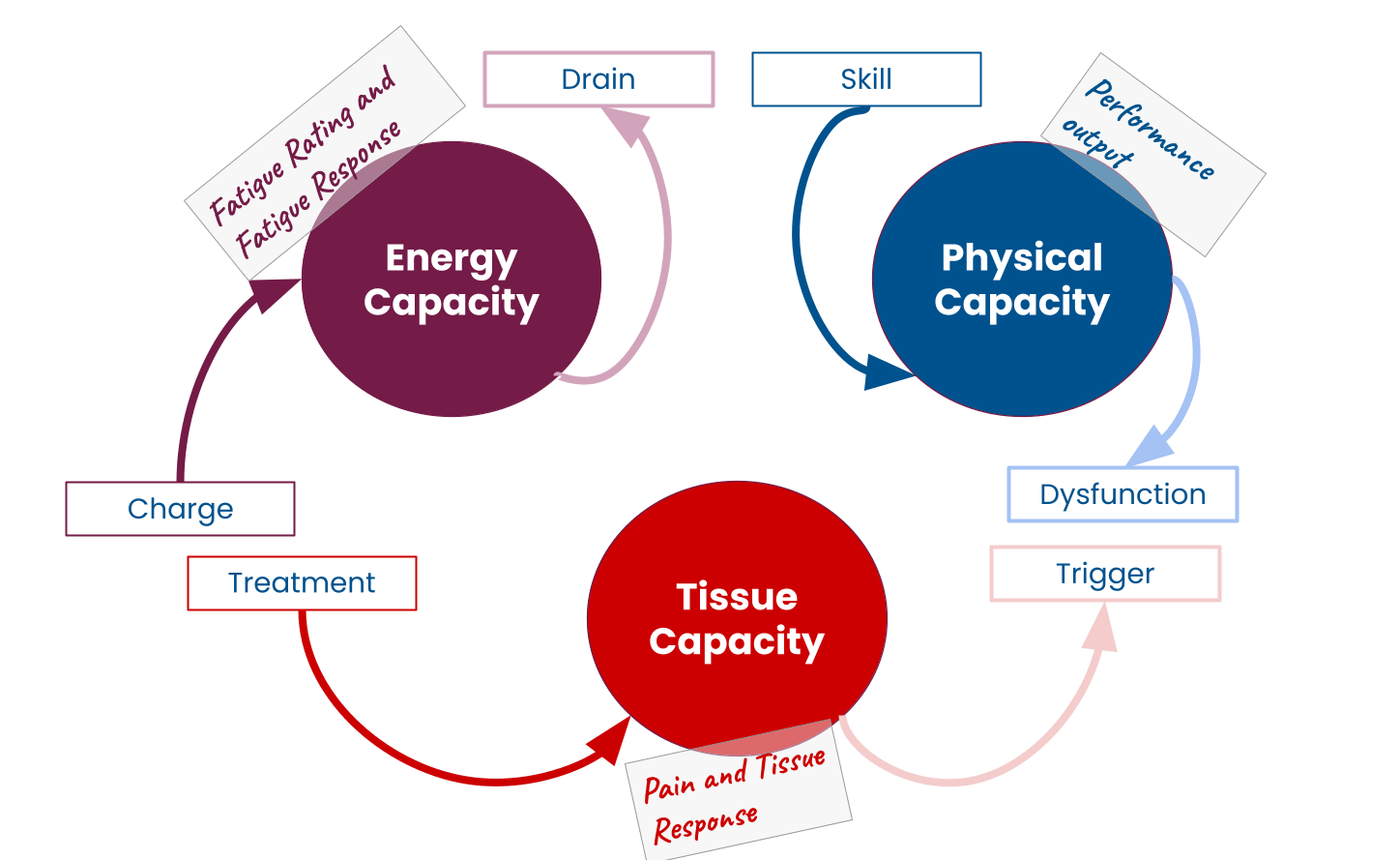
At Smith Performance Center, we believe that a healthy and active runner needs to build and maintain three capacities: physical, tissue, and energy.
If there is a mismatch in capacities or a low level in one, we see that injury, fatigue, and poor performance soon follow. You can build the capacities and in a well functioning system, exercise and your lifestyle fuel all of them together.
The Three Capacities That Must Match for Runners
In runners, injury risk usually appears when three capacities drift out of alignment.
- Physical Capacity – the ability to produce running output
- Tissue Capacity – the ability of bone, tendon, fascia, and muscle to tolerate load
- Energy Capacity – the ability to fuel training and support recovery
When one capacity rises faster than the others, the system becomes unstable and injuries begin to appear.
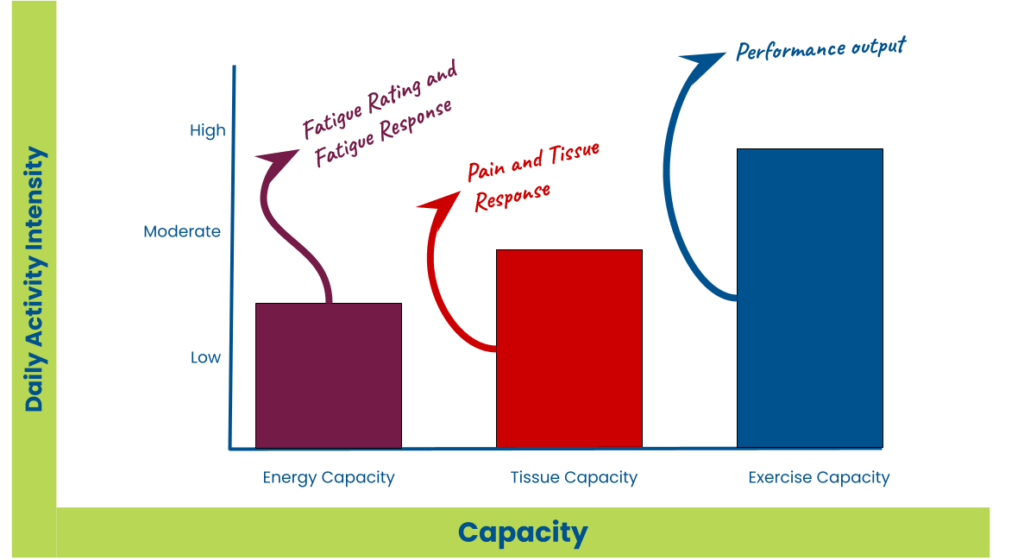
Physical Capacity — What You Can Do
Physical capacity is what you can actually do. This is the skill of running and includes how fast you can run, what stride you use, how hard you can push, and how much mileage you make yourself do in a week.
One of the advantages of running is its accessibility and the large improvements that can be made quickly. This is a feature of physical capacity, you can develop it faster than the other capacities. As anyone who has gone from a couch to running a marathon in the same year, you can develop the ability to do something you once thought impossible.
The problem is not that runners improve at running. The problem is that physical capacity often improves faster than the body can recover, creating a mismatch between energy capacity and tissue capacity.
Tissue Capacity — What Your Body Can Tolerate
For runners cursed with recurrent shin s’plints, our team diagnoses and treats the injured tissue, identifies the functional cause, and manages triggers.
You can read more about how our physical therapists work through your diagnosis in our article “How to Find the Real Cause of Pain: Our 4-Pillar Diagnosis Process“
What gets lost in the process is that we are improving tissue capacity. Tissue Capacity is your structural resilience and threat detector system:
- Bone health and connective tissue strength
- Muscle strength, activation, and inhibition
- What you perceive as pain
- How much pain you can tolerate
If load increases faster than bone remodels, which is much slower than physical capacity can progress, stress reactions and stress fractures occur. If you have a rapid increase in mileage, as often seen with running developing shin splints, your physical capacity is not the limit, it’s the entire leg’s ability to absorb the force you generate and repair in time for the next run.
Common patterns we see in runners with tissue capacity problems:
- Shin pain that returns every time mileage increases
- Sharp, pin point pain on the tibia during landing
- Forefoot pain during push off
- “Medial tibial stress syndrome” that never fully resolves (the forever tenderness on the inside of the lower leg
When tissue capacity plateaus or reduces and physical capacity continues to rise with more mileage at a faster pace, injury happens every time.
This is the first capacity mismatch and it is a real problem with experienced runners. Your physical capacity for running is high, but tissue capacity requires significantly more time.
Our team uses the rehab standard in this situation – training for tissue capacity, not physical capacity – which means we go for no pain, not a hard workout. If you ignore the warning signs and keep training focused on physical capacity, eventually you won’t be running due to pain.
The other, hidden problem, is that tissue capacity can be handicapped by a diminished energy capacity.
Energy Capacity — Your Fueling System
This is the most overlooked variable in runners.
Energy capacity is your ability to supply enough fuel to:
- Provide the nutrients and calories for the body to use in maintenance and growth
- Restore glycogen in the liver and muscle
- Support hormone regulation
- Allow you to keep up with day to day activities while engaging in peak stress coming from running
If you are struggling with fatigue, that is often the first sign of a low energy capacity. Read more about it in our article on Fatigue in Active Adults: Why You’re Tired Despite Exercising and Eating “Healthy”
Our sports dietitian, Jackie, sees a recurrent problem with runners dealing injuries: “The biggest issue I see with nutrition in runners is under-fueling.”
When energy intake does not rise with training demands, runners enter a state called low energy availability. In this state the body begins protecting survival functions instead of investing in tissue repair and bone remodeling.
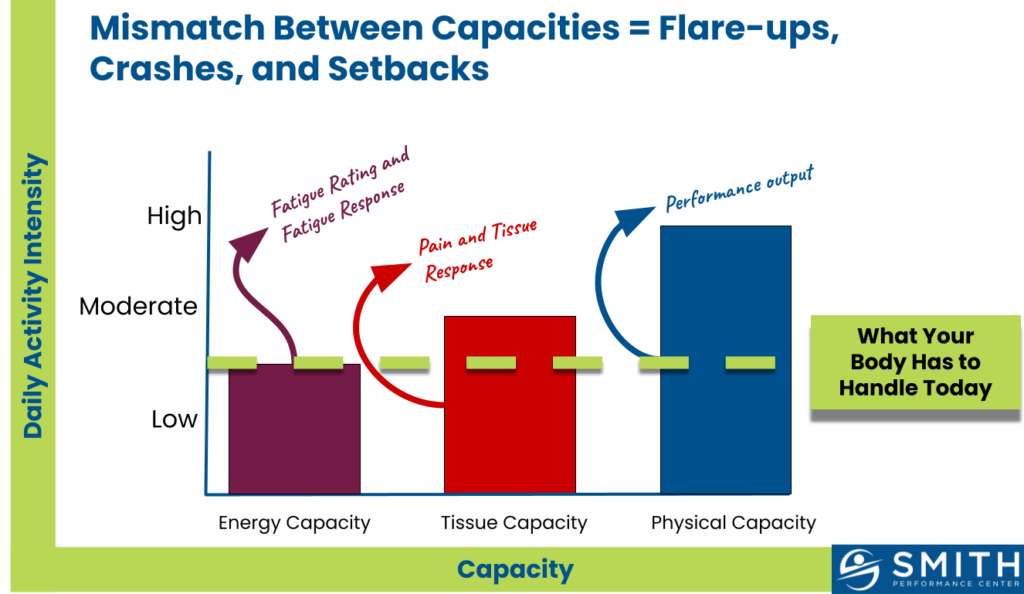
Running increases energy expenditure dramatically, but fueling often does not increase with it. Energy availability is low and running becomes a trigger that reduces tissue capacity.
If the first capacity mismatch occurs when physical training demands exceed tissue capacity, the second mismatch happens when energy capacity drops while daily stress remains high. This results in low energy availability, compromising both tissue capacity and physical capacity.
Recurrent Shin Splints and Bone Stress Injuries – Addressing Energy Capacity And Tissue Capacity
Fake improvement happens when pain decreases because stress temporarily drops, not because the underlying capacities have improved.
When the runner with shin splints returned 4 months after a successful physical therapy rehab, my mistake was using time off, fake improvement, to help with her pain.
Fake improvement is a universal problem in musculoskeletal medicine. The most common recommendations are stop exercising or use a symptom masker. The hope is that time off will correct the tissue capacity problem as the injured structures heal. However in our experience, running related injuries need to be handled more aggressively with controlled trigger management.
If you are not sure what your triggers are or how they play a role in getting back to running and the life you want, read more in our article “Trigger Management: Why Physical Therapy Exercises Are Not Enough“
We need to look at the two biggest issues that leach capacity from energy and tissue: energy capacity drains and tissue capacity triggers.
Why Underfueling Causes Shin Pain and Stress Injuries
There is a common misunderstanding:
“I eat healthy, so it can’t be nutrition.”
But eating healthy is not the same as fueling for performance.
Jackie explains it clearly: “You can eat healthy and still not be eating enough for performance.”
Another key issue:
“We know that exercise reduces immediate hunger cues… but that’s the time it’s most important to refuel your muscles.”
After increasing your running, the following is common:
- Appetite post-run often drops
- Refueling is delayed
- Glycogen remains depleted
- Hormonal signaling shifts
- Tissue repair slows due to reduced fueling
The runner does not always lose weight, but energy availability drops and tissue recovery is compromised because your body goes into survival mode.
Energy availability problems often show up first as:
- Bone stress injuries
- Recurrent shin pain
- Fatigue that feels “normal” for training
Improving Tissue Capacity While Addressing Energy Capacity
We still need to improve tissue capacity.
This is the pattern we see repeatedly:
- Physical capacity increases
- Energy intake stays the same
- Tissue capacity cannot adapt due to underfueling and slower ability to remodel
- Pain develops
The body is not weak; tissue capacity is compromised. It is under-resourced (energy capacity) and overwhelmed (physical capacity).
In this situation, you go from running being okay to a growing trigger list. A trigger is anything that makes tissue capacity lower. If you damage a tissue, it can handle less force and your threshold for triggering pain lowers.
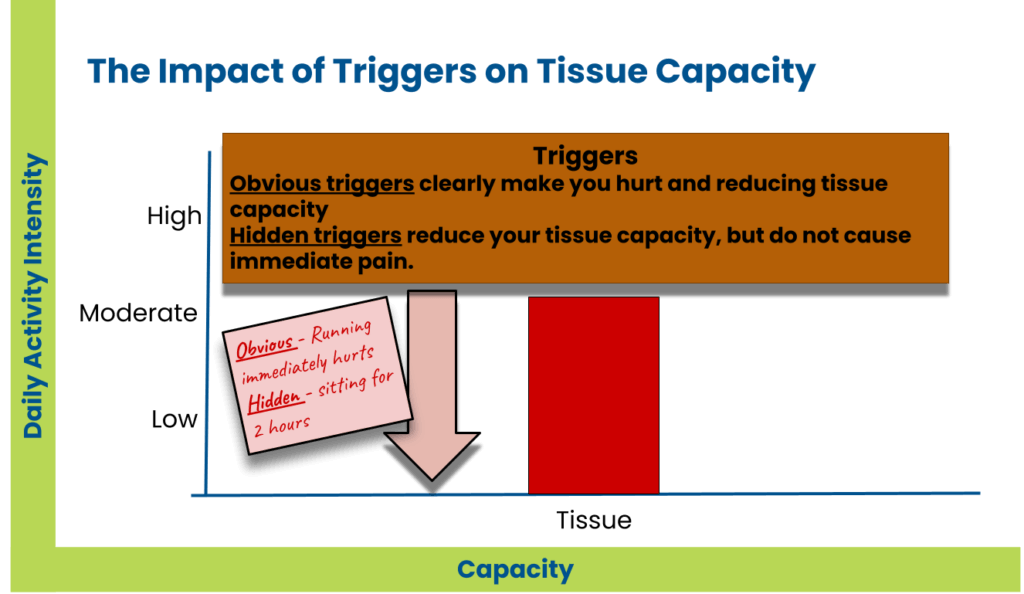
That means that walking can eventually become a trigger if you lower tissue capacity enough even in an elite runner who was hitting 100 miles a week in their last training cycle.
Finding the current edge of tissue capacity is critical.
For our runner, we started by using an uphill treadmill protocol to limit the forces going through the leg along with taping and a post tib brace. This reduces the peak stresses and average stresses while artificially elevating the tissue capacity via the braces.
If we stopped here, though, we would have ended up in the same plan as before.
Building Energy Capacity: When a Dietitian Is Not Optional
Most running injuries are not a sign that the body is fragile. They are a signal that the system has become unbalanced. If you are a runner dealing with:
- A stress fracture
- Recurrent shin pain
- Forefoot swelling
- Fatigue during higher mileage
- GI issues that limit fueling
Energy capacity should be evaluated. I often hear that individuals are “eating perfectly” however your body is clearly indicating that the perfect diet is not perfect for you.
It often reminds me of patients who have a low back extension intolerance and they try to stand with perfect posture that actually makes them hurt worse. Your body gives signals that an individualized plan is needed.
Bone stress injuries and recurrent injuries are not just a biomechanical problem – they are behavioral and capacity problems.
You must address load progression, tissue tolerance, and energy capacity
That combination is what keeps runners healthy long term.
At Smith Performance Center, nutrition is no longer separate from rehab or training. Jackie Hatchew works alongside our physical therapists and coaches to identify when a recurrent injury is an energy capacity problem—and help support the rehab process.
If you’re training consistently but keep getting hurt or stuck, this is the next place to look.
Schedule a Nutritional Initial Evaluation and get to the root cause of your recurring shin pain from running.