Most people wondering, “How can a dietitian help me?” assume the answer is a prescribed meal plan with specific macros and calories to track each day.
This makes sense because many people want a clear answer about what to eat. A meal plan feels like the solution because it provides structure and shows what a “better” day of eating could look like.
The problem is that meal plans often address the symptom, not the root cause. Most nutrition challenges are not caused by a lack of information but by barriers established through daily habits.
The problem and the solution are often not what people think.
This happens in every area of health and fitness.
If someone is not consistently working out, the obvious answer may seem like joining a 24-hour gym.
Now a person thinks “I can go anytime; there is no excuse for missing a workout,” when in reality they are twice as likely to pay for a membership they never use versus developing an exercise habit.
The real problem – poor scheduling skills, low energy, no plan, no accountability, and lack of experience with the movements – is not addressed, despite the seeming logic.
The same thing happens with pain and injury.
If someone feels hamstring tightness, the obvious solution may be to stretch the hamstring.
But if the real problem is nerve sensitivity, low back referral, poor pelvic control, strength loss, or a training load issue, then stretching may only create short-term relief or no change at all. The symptom points to the area of concern, but it does not always explain the cause.
A better solution starts with a better diagnosis.
What is your main problem?
The way people approach nutrition has the same problem, but is even more “insidious”.
If someone wants to lose weight, gain muscle, improve performance, reduce cravings, or have better energy, the obvious solution may seem like following the “perfect” meal plan.
In our experience, this fails miserably because it misses the problem.
The real problem may be inconsistent meals, poor preparation, under-fueling, emotional eating, low protein intake, blood sugar crashes, poor sleep, stress, GI symptoms, a variety of health issues, or a schedule that makes consistency difficult. If the plan does not address the actual barrier, the person may improve for a short time and then return to baseline.
A meal plan sounds simple, but following a meal plan requires many skills: a person needs to know how to shop; plan meals, manage hunger; adjust portions; prepare food; handle restaurant experiences with friends and family; recover from missed meals; fuel around workouts; and adjust when life gets busy.
They need to understand how to respond when experiencing cravings, appetite changes, increased stress, or plateaus when the original plan stops working.
These are not easy adjustments.
They are often the essential skills that will determine if that person can reach their goal or not.
Always get confused between “Dietitian” and “Nutritionist”? Read this!
https://smithperformancecenter.com/dietitian-vs-nutritionist/
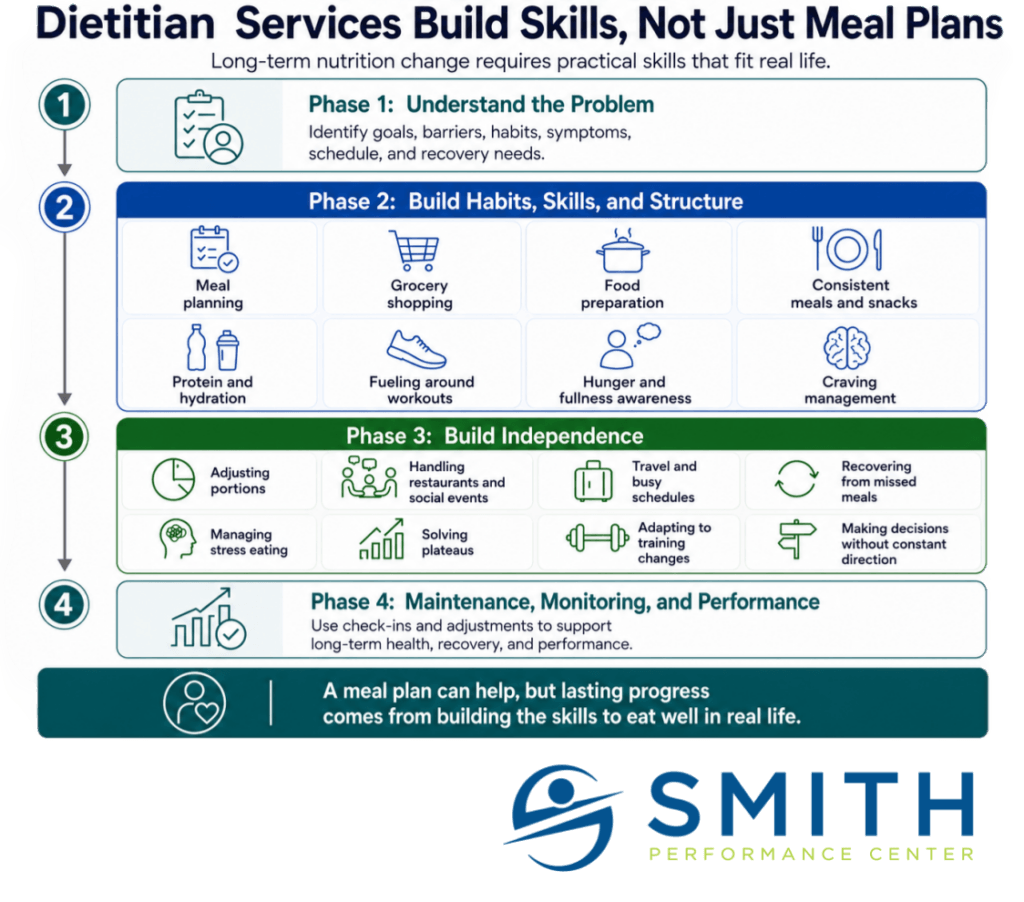
This is why dietitian services at Smith Performance Center are built around phases.
The goal is not to hand someone information and just “hope they follow it”. The goal is to understand the real problem, build the habits and structure needed to solve it, develop independence, and support long-term health. This is the same reason our physical therapy and strength training services also follow a phase-based model. The phase structure helps us know what problem we are solving and what kind of support the person needs next.
Nutrition care should target the actual problem before prescribing the solution.
If the problem is lack of knowledge, education may help.
If the problem is poor structure, the person needs a better system.
If the problem is low energy, under-fueling, cravings, GI symptoms, or poor recovery, the plan has to address those drivers.
The right solution depends on the right diagnosis.
That is why lasting nutrition change requires more than a meal plan.
Phase 1: Understand the Problem
Phase 1 is about understanding where you are now.
Your dietitian wants to understand your goals, current habits, schedule, symptoms, health history, training demands, appetite, cravings, and barriers. This phase is not about “judging food choices”: it is about outlining the full problem before trying to solve it. A better plan starts with a better understanding of what is actually happening.
Many people have never had their nutrition problem evaluated this deeply and may be surprised at how thorough their history will be evaluated.
We want to know what you think and have been told.
You may have been instructed to eat less, or to eat more protein, or to count calories, or to avoid certain foods, or just “be more consistent”.
Some of that advice may contain truth, but it is incomplete without context. The right plan depends on the reason the problem is happening. A person with under-fueling needs a different strategy than a person with poor structure, grazing, cravings, GI symptoms, or blood sugar spikes.
Phase 1 gives us the starting point on the map.
Without a starting point, every plan is just guessing.
The dietitian’s role is to identify what is driving the problem and what needs to change first. This allows the plan to match the person instead of forcing the person into a generic plan. That is the difference between nutrition advice and dietitian services.
The Same Phase System Across the SPC Team
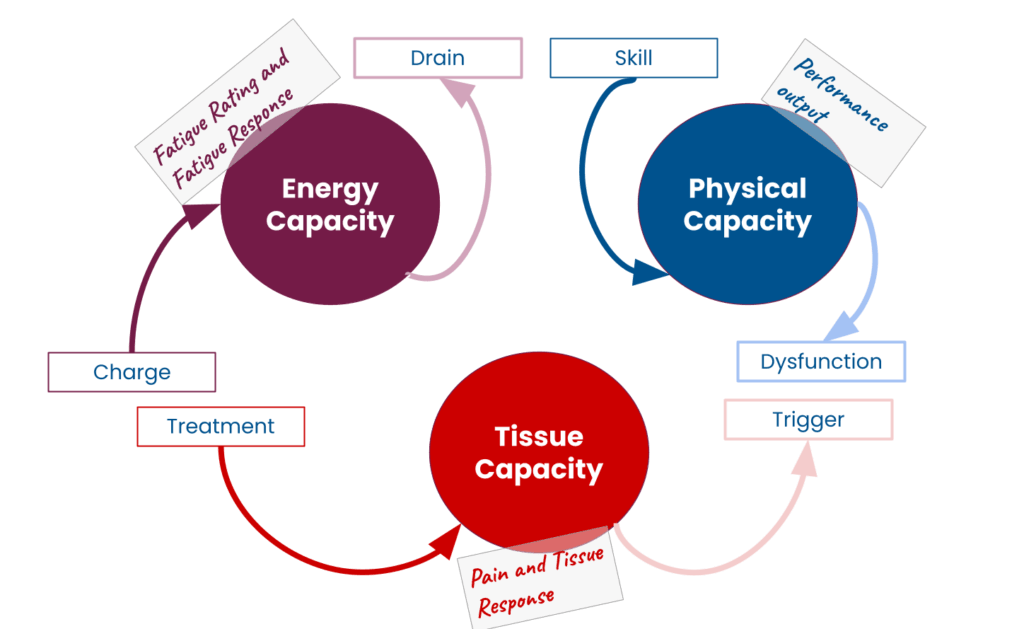
Physical therapists, strength coaches, and dietitians all use the SPC phase system, but each applies it to a different capacity problem.
Physical therapists focus on tissue capacity, coaches develop physical capacity, and dietitians improve energy capacity. The shared phase structure keeps the team aligned while allowing each professional to solve the specific problem within their expertise.
Phase 2: Build the Habits, Skills, and Structure
Phase 2 is where we start solving the problem.
This is where nutrition advice becomes measurable goals. The dietitian helps build the habits, skills, and structure needed to make progress toward the goal. This may include consistent meals and snacks, protein targets, meal timing, fueling around workouts, grocery planning, hydration, or strategies to reduce grazing and cravings.
The goal is not perfection because nutrition is rarely perfect.
The goal of Phase 2 is foundational.
In this phase you will build a foundation that allows you to achieve many of your goals.
A plan only works if it fits into real life. Someone may need a larger breakfast, a more consistent lunch, a plan for evening hunger, or a better way to fuel training.
Someone else may need help eating enough, organizing meals, improving recovery, or managing GI symptoms. The dietitian’s role is to turn the goal into specific behaviors the person can practice.
Many early successes are driven by consistency of proper intake.
Within the first couple of weeks, some people may notice better adherence to goals, more consistent meals and snacks, improved energy, fewer cravings, better hunger and fullness cues, more regular bowel movements, or fewer blood sugar crashes.
Within two to six weeks, appetite may become more stable, grazing may decrease, GI symptoms like bloating or reflux may improve, recovery from workouts may improve, sleep may improve, and weight trends may begin to change.
These changes are not guaranteed, but they are the types of outcomes we often work toward.
The body responds well when the plan addresses the right problem and becomes consistent enough to matter.
Phase 3: Build Independence
A lot of people can succeed for a short period of time. That is not the same thing as independence.
Many people can follow a plan when motivation is high, the schedule is predictable, and the goal feels urgent. The harder skill is maintaining progress when life changes.
This is where many nutrition plans fail.
Phase 3 is about helping the person maintain progress without needing “constant direction”.
The dietitian helps the person adjust the plan, solve problems, and make decisions in real life: this may include handling travel, busy work weeks, restaurants, stress, illness, training changes, plateaus, or motivation drops.
The goal is to help the person understand what to do when the ideal plan is not available. This matters because real life will always test the system.
Success is not just reaching the goal. Success is knowing how to maintain the behaviors when conditions are not ideal.
A person needs to understand how to respond when cravings return, when meals are missed, when training volume changes, or when progress slows.
The dietitian’s role is to help the person build flexibility without losing direction. That is what makes the change more durable.
Phase 4: Maintenance, Monitoring, and Performance
Phase 4 is long-term support for a healthy life.
This does not mean someone needs dietitian services every week forever.
It means health, goals, training, schedules, and bodies change over time. The plan that worked in one season of life may not be the plan that works in the next one. Maintenance gives the person a way to adjust instead of starting over every time life changes.
The dietitian’s role in Phase 4 is monitoring and adjustment.
For some people, this means occasional check-ins to maintain consistency. For others, it means adjusting nutrition around training, body composition, recovery, health markers, aging, bone health, or medical changes.
The goal is to keep the system working as the person’s life changes. This is why we view dietitian services as a long-term support structure, not a short-term challenge.
Maintenance is not failure.
Maintenance is the phase where nutrition becomes part of how someone lives.
The goal is to eat in a way that supports energy, health, performance, recovery, and quality of life. When new problems show up, the person should have a process for adjusting. That is a much better outcome than needing to restart from zero over and over again.
What Can Improve Over Time?
Everyone responds differently.
Results depend on the person’s starting point, goals, consistency, health history, and the specific problem being addressed. Dietitian services can create meaningful changes, but the timeline is not the same for everyone. Some changes happen quickly because daily inputs change quickly.
Other changes require more time because the body, habits, and health markers need longer to adapt.
Within two weeks, some people may notice early changes.
These changes may include better adherence to goals, more consistent meals and snacks, improved energy, fewer cravings, better hunger and fullness cues, more regular bowel movements, and fewer blood sugar crashes. These early improvements often come from better structure and more consistent fueling. They are important because they show the plan is starting to match the person’s needs. Early wins also help build confidence that change is possible.
Within two to six weeks, the changes may become more stable.
Appetite may become more predictable, grazing may decrease, and GI symptoms like bloating or reflux may improve. Some people may also notice better workout recovery, improved sleep quality, early weight trend changes, and stronger habits. This stage matters because the person is no longer just trying a plan. They are beginning to build a repeatable system.
Within six to twelve weeks, larger changes may begin to show up.
This can include body composition improvements, better strength progression because nutrition is supporting training, improved training tolerance, and better recovery trends.
Some people may also see improvements in menstrual regularity or lab values when those issues are related to nutrition, energy intake, or consistency. These changes are not automatic, and they depend on the person and the problem. This is why the plan needs to be monitored and adjusted over time.
After three months and beyond, the focus shifts toward lasting change.
This is where long-term habits, improved health outcomes, maintenance of progress, and progression of body composition become more realistic goals. Bone health, performance, recovery, and medical markers often require longer timeframes and ongoing consistency. The goal is not to chase short-term results forever. The goal is to build a way of eating that can support the person’s life for years.
Dietitian Services Should Help You Live Better
The goal of dietitian care at SPC is not to make food more complicated.
The goal is to make the problem clearer and the plan more useful.
A good plan should help a person understand what is getting in the way, what needs to change first, and how to build the habits that support progress. It should also help the person become more independent over time. That is different from simply being told what to eat.
A meal plan can be useful, but it is not the whole solution.
The real solution is building the capacity to eat, recover, train, and live in a way that supports where you want to go. That requires understanding, structure, practice, independence, and maintenance.
This is why dietitian services at Smith Performance Center follow a phase method. The phases help turn nutrition from a short-term plan into a long-term support system for health, performance, and quality of life.
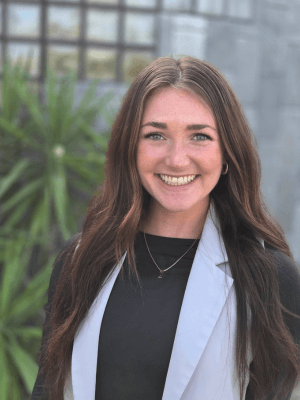
Jackie Hatchew, MS, RD is a registered dietitian at Smith Performance Center who helps active adults address fatigue, recovery issues, and performance plateaus by improving energy capacity. Her approach focuses on practical, individualized fueling strategies that support training, injury recovery, and daily life without restriction or rigid diets.