Physical Therapy for Rotator Cuff Pain

Understanding the Rotator Cuff Anatomy and Function


There is a list of classic complaints I hear due to shoulder pain:

  • I have trouble reaching behind my back. 
  • Putting on clothing hurts. 
  • Reaching for objects causes a spike in pain. 
  • I have trouble getting my arm overhead. 
  • I feel like one arm is weaker than the other, and fatigues quickly.
  • I cannot throw.
  • I have trouble sleeping on my shoulder due to pain. 
  • I have pain that runs down my arm. 
  • I have shoulder pain and now I have neck pain. 

Often, these complaints are caused by an injury to the rotator cuff. 


How do the anatomy and function of the rotator cuff impact physical therapy?

What is my rotator cuff injury?

How long till my rotator cuff injury is better?


Shoulder Overview

The shoulder is a complex joint. It is involved in most daily activities. Once it has become painful, symptoms can be alarming, persistent, and limiting. A crucial part of a healthy shoulder is a healthy rotator cuff. In this article, I will describe the rotator cuff so that you can start to understand why shoulder pain develops. Through this series of articles, you will learn how to test the rotator cuff, effective treatment strategies for rotator cuff injuries, and what to expect if you are a patient with a shoulder injury. 


Understanding the rotator cuff

In order to understand the rotator cuff, you need to start with the anatomy.  If you understand this, it makes the following information on injuries and treatment easier to understand.


Rotator Cuff Anatomy

The rotator cuff is a group of four muscles.  They start from the shoulder blade and attach to the humerus.  Three of the four muscles are on the back of the shoulder: supraspinatus, infraspinatus, and teres minor.  One is on the front- subscapularis.  

Each of the four has different actions, which leads patients (and practitioners) to think of them in isolation.  I think the muscles are best understood as a sleeve.  This muscular sleeve envelops the shoulder joint (see below). When the muscles contract, the sleeve compresses the joint, holding the shoulder in a stable position. Shoulder braces are designed to mimic this design.

Each rotator cuff muscle attaches partially to bone (the humerus), and partially to the joint capsule and ligaments. The shoulder joint capsule and ligaments also work to support the shoulder. Together with the rotator cuff, these are the two systems that control how your shoulder moves. Any time you use your arm, these systems work together to make the motion as efficient as possible. 


Rotator Cuff Function

The rotator cuff muscles have several functions which are vital for the movement of the arm.


Key Concept 1

The most important role is to center the head of the humerus on the glenoid cavity of the scapula. The shoulder is often described as a golf ball (the head of the humerus) on a tee (the glenoid cavity of the scapula). In this analogy, the rotator cuff provides the force which holds the golf ball on the tee. Imagine the golf ball and tee rotated horizontally, or flipped upside down: the rotator cuff pulls the golf ball onto the tee in all these positions. Just like an actual golf ball and tee, if the ball is not centered on the tee, your drive will suffer. Similarly, if the humerus is not centered on the glenoid, your performance (and shoulder) will suffer.


Key Concept 2

The rotator cuff muscles produce rotational motion at the shoulder. 

Subscapularis is the primary internal rotator of the shoulder. 

Supraspinatus is a weak abductor and external rotator

Infraspinatus is the primary external rotator of the shoulder. 

Teres minor assists with external rotation and weakly adducts the shoulder


Key Concept 3

The rotator cuff can provide physical support to the shoulder. Typically the labrum, ligaments, and joint capsule control unwanted movement. In cases where these structures are compromised, or with intense activity, the rotator cuff muscles provide a second layer of support. 


Two examples of this: 

Subscapularis can block the head of the humerus from moving too far forward (which often happens during throwing). 

Infraspinatus can restrain the humerus from shifting too far posteriorly (to help prevent posterior dislocation). 

Summary

This is a basic overview of the rotator cuff, but you can understand a lot about the shoulder just by understanding the rotator cuff. Please read on to understand how the rotator cuff structure and function described above relate to shoulder pain. 
 

Related Posts

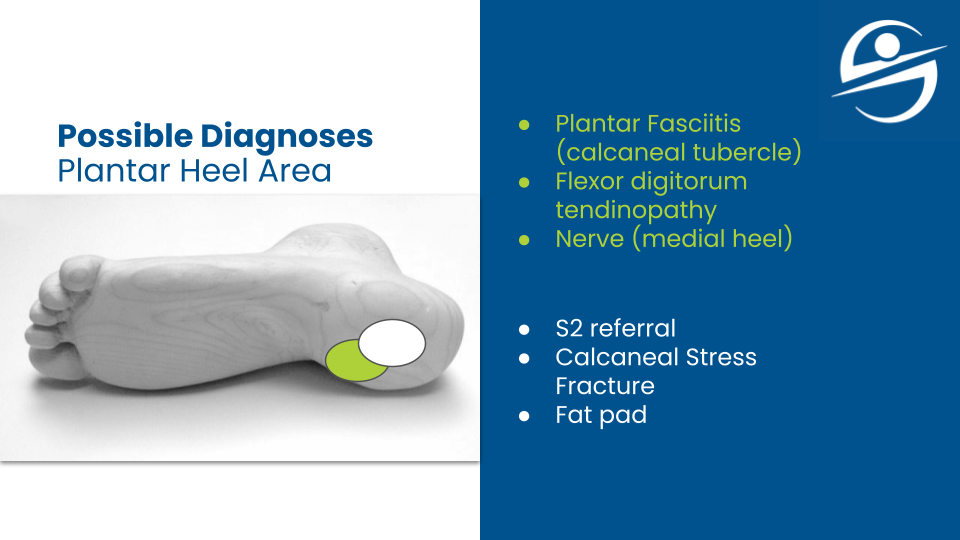
diagram showing heel pain in Tucson caused by different structures in the foot including the plantar fascia and flexor digitorum brevis

Flexor Digitorum Brevis Pain: 7 Signs Your Heel Pain Isn’t Plantar Fasciitis

If you’re dealing with heel pain in Tucson that hasn’t improved despite treatment for plantar fasciitis, you’re not alone. At Smith Performance Center, we often see people who’ve tried injections, stretching, shoe inserts, and ice bottles—yet their heel still hurts. In many of these cases, the real problem isn’t the plantar fascia at all, but a muscle on the bottom of the foot called the flexor digitorum brevis. You wake up, swing your legs to the edge of the bed, and… hesitate. You know this is going to hurt. The good foot moves to the ground first—you learned from that mistake a month ago. You brace and put down the other foot, the ungrateful one that will not get better despite the trip to the podiatrist, the injection, physical therapy, the shoe inserts, the ice bottle massage, and the stretching exercises. The foot touches down. It’s not so bad, you

Read More »

Steps To Develop A Diagnosis In Physical Therapy

“My butt hurts.” A significant proportion of my conversations start with this statement. She continued, “ I have regular active release along with dry needling. I stretch my hamstring ALL THE TIME and I still have pain.” Her frustration was palpable. “I know I have a tight hamstring and there is scar tissue.  But it’s been 8 months.” She assumes the pain must be the hamstring; we call this the pain generator.  The hamstring tendon attaches right where her pain starts. The tightness is over the hamstring muscle belly.  She describes the pain in a clear way that implicates the hamstring.   She made a convincing argument that the hamstring is the issue and the diagnosis has been repeated by multiple medical providers including a physician and two physical therapists. The location matched.  Running increased the pain. Another match. Stretching and manual therapy provided temporary relief. But 8 months into the

Read More »
Male triathlete running outdoors with overlaid quote emphasizing tissue capacity over training volume, alongside the Smith Performance Center logo.

Triathlon Injury Rehab: How SPC Phases Prevent Setbacks

Recurring injuries derailed Alex’s triathlon training for years—until he adopted a structured, phase-based rehab approach. This case study shows how the Smith Performance Center Phase System helped him move from chronic pain to consistent performance by focusing on what most athletes overlook: building tissue capacity to match training demands.

Read More »
diagram showing heel pain in Tucson caused by different structures in the foot including the plantar fascia and flexor digitorum brevis

Flexor Digitorum Brevis Pain: 7 Signs Your Heel Pain Isn’t Plantar Fasciitis

If you’re dealing with heel pain in Tucson that hasn’t improved despite treatment for plantar fasciitis, you’re not alone. At Smith Performance Center, we often see people who’ve tried injections, stretching, shoe inserts, and ice bottles—yet their heel still hurts. In many of these cases, the real problem isn’t the plantar fascia at all, but a muscle on the bottom of the foot called the flexor digitorum brevis. You wake up, swing your legs to the edge of the bed, and… hesitate. You know this is going to hurt. The good foot moves to the ground first—you learned from that mistake a month ago. You brace and put down the other foot, the ungrateful one that will not get better despite the trip to the podiatrist, the injection, physical therapy, the shoe inserts, the ice bottle massage, and the stretching exercises. The foot touches down. It’s not so bad, you

Read More »

Steps To Develop A Diagnosis In Physical Therapy

“My butt hurts.” A significant proportion of my conversations start with this statement. She continued, “ I have regular active release along with dry needling. I stretch my hamstring ALL THE TIME and I still have pain.” Her frustration was palpable. “I know I have a tight hamstring and there is scar tissue.  But it’s been 8 months.” She assumes the pain must be the hamstring; we call this the pain generator.  The hamstring tendon attaches right where her pain starts. The tightness is over the hamstring muscle belly.  She describes the pain in a clear way that implicates the hamstring.   She made a convincing argument that the hamstring is the issue and the diagnosis has been repeated by multiple medical providers including a physician and two physical therapists. The location matched.  Running increased the pain. Another match. Stretching and manual therapy provided temporary relief. But 8 months into the

Read More »
Male triathlete running outdoors with overlaid quote emphasizing tissue capacity over training volume, alongside the Smith Performance Center logo.

Triathlon Injury Rehab: How SPC Phases Prevent Setbacks

Recurring injuries derailed Alex’s triathlon training for years—until he adopted a structured, phase-based rehab approach. This case study shows how the Smith Performance Center Phase System helped him move from chronic pain to consistent performance by focusing on what most athletes overlook: building tissue capacity to match training demands.

Read More »