Background: A Frequently Injured Triathlete
Meet Alex, a triathlete who thrives on the challenge of training and competition. But over the years, he’s been held back by recurring injuries—chronic calf cramping, back pain, neck discomfort, and knee pain. Despite trying physical therapy, stretching, massage, and adjusting his training, setbacks continued to derail his progress.
Alex’s story isn’t unique. Triathlon blends three demanding sports—each with its own mechanical load and recovery demands—leading to complex injuries and delayed feedback loops that make accurate diagnosis and injury management harder.
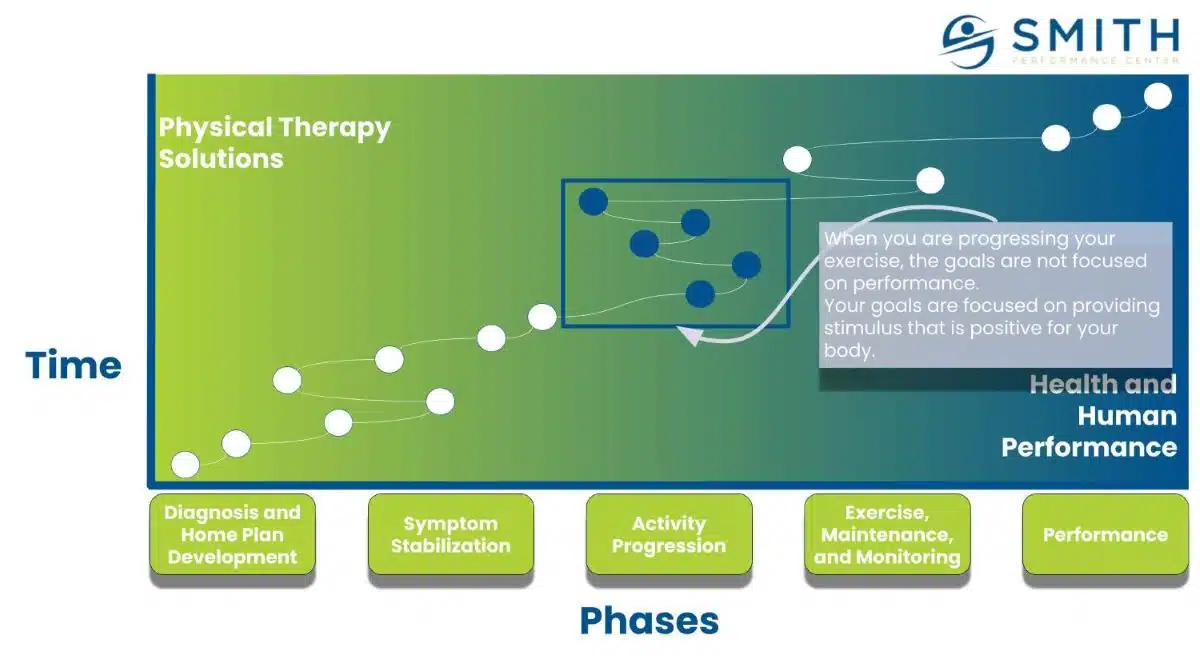
At Smith Performance Center, we use our four-phase system to break this cycle that often happens in triathlon injury rehab. Here’s how Alex worked through the phases and returned to consistent, high-level training.

Phase 1: Diagnostics and Home Plan Development
Problem
Alex doesn’t know what’s causing his pain. He’s avoiding or modifying the activities he loves and doesn’t trust his body anymore.
Approach
Phase 1 is about diagnostic clarity. We use four diagnostic pillars:
- Structural: Tissue damage or degeneration
- Functional: Deficits in mobility, stability, or control
- Treatment Response: What immediately changes symptoms
- Triggers: Activities or conditions that worsen or improve pain
Triathlon injuries are complex. We need to understand whether the issue shows up in the basic exam or only under sport-specific load. That clarity defines what to treat—and what to ignore.
Goal
Understand what’s wrong, reduce symptoms, and create a home plan that works immediately.
Steps to Complete Phase 1
- Confirm the source(s) of pain
- Replicate symptoms with physical tests
- Develop a reliable key sign
- Reduce symptoms through in-session treatment and the home plan
- Build the first version of the home plan
- Set patient-driven goals
- Establish testable feedback loops
- Identify early triggers to support the diagnostic process
Promise
Alex will leave with a clear diagnosis, a working theory for his pain, and a home plan that already helps—no guesswork.

Phase 2: Symptom Stabilization
Problem
Alex feels better after treatment sessions but can’t consistently manage symptoms on his own. He’s not confident training without external support.
Approach
Symptom stabilization is about control—building the skill to self-manage pain, identify triggers, and stop flare-ups before they escalate. For triathletes, hidden interactions between sports and lifestyle often create confusing flare patterns. Alex needs to catch them early and act.
Goal
Alex can consistently manage his symptoms with his home plan, returning to normal training levels without setbacks—though ramping up still requires care.
Steps to Complete Phase 2
- Build Alex’s ability to resolve symptoms independently
- Expand the trigger list as training volume increases
- Refine key signs and ensure daily usability
- Address contributing factors (e.g., strength imbalances, poor movement)
- Practice real-time symptom management during training
- Reinforce home plan routines for symptom control
- Reduce dependence on meds, modalities, or frequent clinician visits
Promise
Alex will train consistently without being derailed by flare-ups—and knows how to intervene early if symptoms return.
Phase 3: Activity Progression
Problem
Alex is active again but keeps overshooting what his body can handle. He feels worse the day after harder sessions and doubts whether a pain-free lifestyle is even possible.
Approach
This phase is about building tissue capacity, not just tolerating workouts. Triathletes with prior training may overestimate their load tolerance. We focus on progressive, well-paced volume increases across swim, bike, and run—especially the high-impact elements like running.
Goal
Alex can increase training using a system that balances tissue capacity with sport demands—without recurring injury.
Steps to Complete Phase 3
- Establish training baselines for swim, bike, run, and strength
- Use feedback loops and key signs to guide progress
- Start with lower-impact progressions (e.g., uphill treadmill running)
- Introduce strength work targeting weak or inhibited areas
- Monitor delayed symptom response (especially day-after pain)
- Address lingering movement inefficiencies
- Plan strategic deload weeks
- Expand the home plan to support recovery and load adaptation
- Coordinate sport-specific workload to prevent overload
Promise
Alex will rebuild a durable foundation for training and racing, progressing without falling into the injury-reinjury loop.
You can read more about how we think about introducing strength training in our article Strength Training for Triathletes: How to Build Capacity Without Derailing Your Training
Phase 4: Maintain, Monitor and Maximize
Problem
Alex is no longer injured but needs a structured approach to build performance and avoid backsliding. Time and energy are limited, and poor planning risks re-injury.
Approach
The off-season becomes a critical window for rebuilding strength, addressing imbalances, and laying the foundation for the next season. Minor issues that don’t cause pain in-season often lead to future breakdowns if ignored.
Goal
Build a sustainable, well-rounded program that supports long-term training and race performance.
Steps to Complete Phase 4
- Strength train 2-3x/week to build specific capacity (physical, energy, tissue)
- Address injuries or inefficiencies that weren’t prioritized in-season
- Keep endurance sessions easy while focusing on technique
- Use goal-based blocks to develop targeted adaptations
- Reinforce injury prevention and performance skills (e.g., swim mechanics, bike fit, run gait)
- Maintain regular check-ins or Open Clinics to spot early issues
- Adapt the home plan to fit the demands of this phase
Promise
Alex will be able to train with confidence, balance his schedule, and stay on track for next season’s peak performance.
Summary:
Through the SPC System, Alex moved from constantly battling setbacks to confidently managing his training, handling flare-ups, and chasing performance goals without fear.
Whether you’re training for your next Ironman or just trying to stay active without crashing every few weeks, the SPC system adapts to your needs while holding a clear standard for progress.
Can we help?
Tired of hitting the same wall in training?
Don’t just rehab. Rebuild smarter.
Schedule a Movement Assessment or Physical Therapy Evaluation at Smith Performance Center to start your injury-free comeback today.