
Welcome to the

SPC Archives

Find related articles and learn more about our process at SPC.

Search

Author: Craig Smith

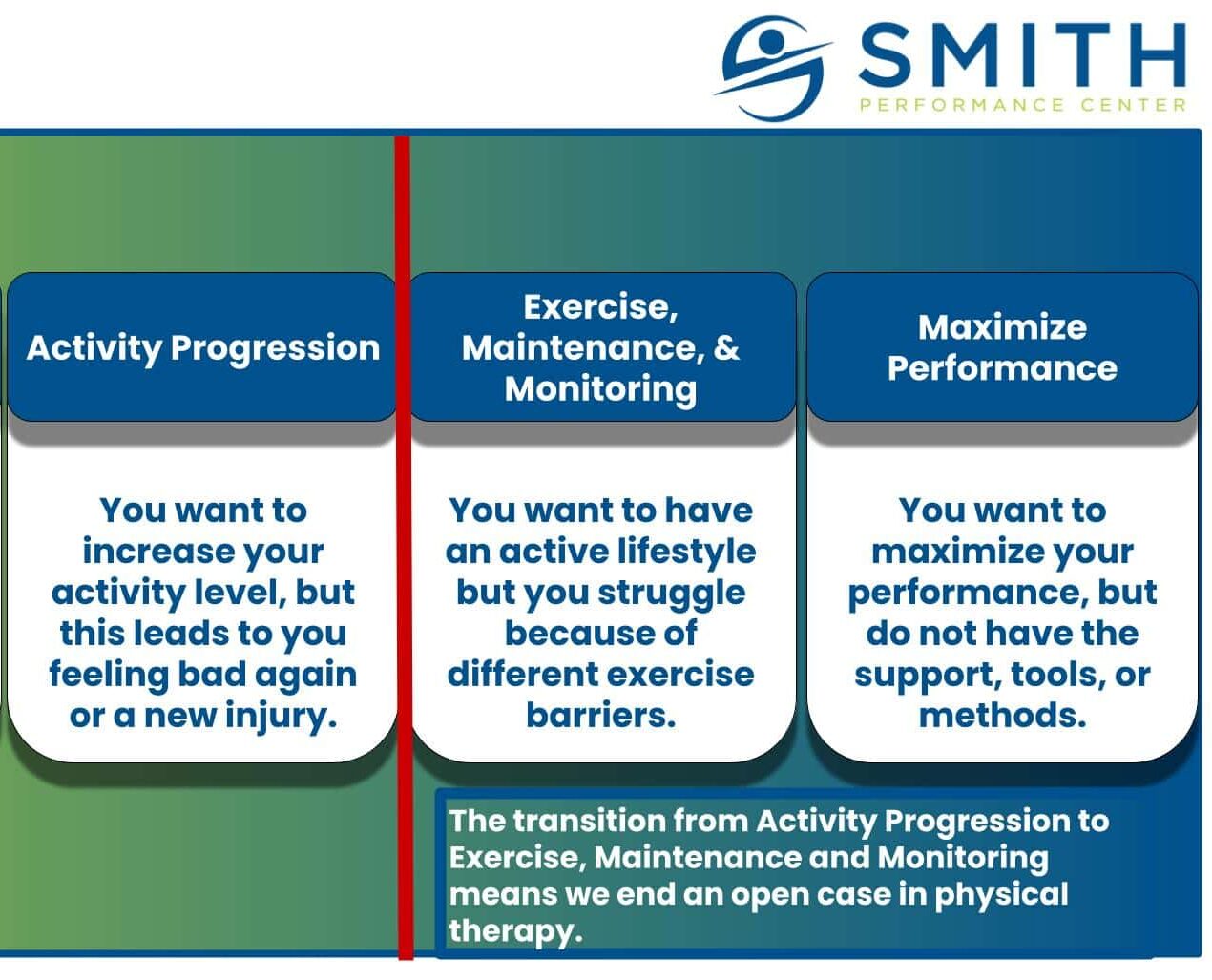
Visual diagram showing the journey through the Smith Performance Center system, including clinical phases of rehabilitation, activity progression, and performance development. Highlights each stage a patient moves through from initial injury to independent training and long-term success.

What are the phases at Smith Performance Center?

At Smith Performance Center, we focus on the main problem of the client. This focused process revealed a recurring set of problems that many of our clients experienced. This led to an overall process we call SPC Phases. There are 5 phases for our clients at Smith Performance Center: Diagnostics and Home Plan Development, Symptom Stabilization, Activity Progression, Exercise, Maintenance, and Monitoring, and Maximize Performance. Each phase consists of a main problem, the common challenges experienced by the clinician, coach, and client when managing your problem, steps to achieve along the way, and a promise for what you get when you complete the phase. We believe a clear process matters to your overall success. We want to explain the problem, common challenges, steps to achieve, and the promise. The Focus On A Problem The focus of a phase is the problem being solved.  In Diagnosis and Home Plan Development, we

Read More »

The 4 Unique Training Variables Used By Our Team To Improve Workout Success

Creating a single, hard workout is easy.   Creating a series of workouts that improve your overall fitness is not. Creating a true program that builds your skill set, builds your confidence, and adjusts for soreness or an emerging injury is extremely difficult. In the same vein, it is not hard to develop a physical therapy exercise list that targets a single problem, like glute inhibition. It is much harder to progress post-injury using strength training when we need to push the edge of the tissue capacity.  Programming a workout needs to consider numerous, modifiable variables. Remember a modifiable variable is anything you can change in the workout to optimize the training session and the overall programming scheme. At a minimum, you need to consider intensity, sets and reps, rest intervals, frequency of workouts, and supersets.   The minimum however does not optimize your workout and sometimes these are not the most

Read More »
Craig Smith, PT, DPT, conducts a knee exam at Smith Performance Center, demonstrating expert physical therapy techniques in knee pain assessment, rehabilitation, and injury recovery while flexing his arm in a lighthearted moment.

Total Knee Case Study: Why You Need A Structured Rehab Process

A structured rehab process that ultimately targets a full return to activity is missing in healthcare. Patients struggling with pain are treated as if they are all the same. We believe there are common, big problems to address, but there is a high degree of uncertainty with every patient presentation. Even when a patient has the same diagnosis they can have different triggers, different contributing factors, different behaviors, and drastically different needs in the rehab process. This is true when patients have the same surgery by the same surgeon.   Let me use an example with a straightforward rehab plan; post-total knee replacement.   The Painful Total Knee Replacement Peter Pain had a total knee replacement.  He has always been active and handles pain well but this replacement has been horrible. First, he fell behind on medication post-surgery because he hated the way the drugs made his stomach feel. The second day

Read More »

The 5 Common Modifiable Variables For Programming A Great Workout and Program

There are numerous modifiable variables in an exercise program that you can use to improve your workout experience, increase effectiveness, and make the workout more fun. A Modifiable Variable is anything you can manipulate in a workout program (which is literally everything) to change the challenge. It includes exercise choice, movement patterns, exercise pool, alternative exercises available, sets, reps, intensity, rest breaks, prep exercises, warm-up, exercise order, recovery activity, support exercises based on body response, and workout frequency. Our Team believes the most important initial modifiable variable is exercise choice, which is often not used well. This is one of the reasons we start with a movement assessment.  But all of these variables are important and have a huge impact on your experience and the likelihood of success with developing an exercise habit. Our team targets these variables beginning in activity progression and it remains a critical aspect of training

Read More »

When and Where You Feel Foot Pain During Walking Is Key for Diagnosis

Why the Phase of Pain Matters Foot pain while walking is one of the most common reasons people seek physical therapy. Understanding when and where it hurts can reveal the true cause. Its actually diagnostic. (If you want to read more about how we think about diagnostics, read How to Find the Real Cause of Pain: Our 4-Pillar Diagnosis Process). This means we can figure out the pain generator. That is a large list. It can be the fat pad, your fascia (the most common, incorrect diagnosis), plantar intrinsics (muscles on the bottom of the foot which is primarily the flexor digitorum brevis, abductor hallucis, and abductor digiti minimi), the flexor hallucis longus, the tibial nerve, the medial or lateral plantar nerve, the calcaneus, the talus, the bones of the midfoot and forefoot, the foot and ankle joints, ligaments, the hallux (big toe), or the little toes. It does not

Read More »

What are the 3 major issues in physical therapy and exercise?

Physical therapy quality is highly inconsistent between clinicians, clinics, and companies. Numerous factors play into these discrepancies, including clinical process, management structure, payment models, clinician-patient time, use of assistants, patient load, clinician training, and business models. These issues often culminate in underwhelming rehabilitation outcomes for clients. When embarking on a rehab journey, most patients don’t anticipate these issues. As Sarah Smith, PT, DPT, and co-founder of Smith Performance Center, observes: “Many patients don’t know where to start their rehab journey, and physical therapy is often not their first choice.” Choosing a clinic that treats 25 patients daily with heavy use of assistants is vastly different from one that sees six patients daily with dedicated one-on-one time. Blending the art and the science of physical therapy requires more than most patients realize. From our experience, three key areas drive these differences: Process, Patient-Provider Relationship, and Clinical Skill. Clinics that avoid assistant

Read More »

The 5 Most Useful Tools for Progressing Your Workouts After an Injury

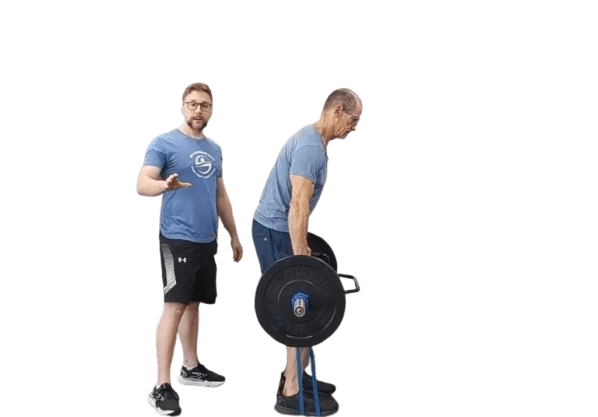
Too many fail in their effort to progress activity after an injury. You arrive at the gym feeling good but later in the day the low back soreness that has been feeling better comes back or the knee pain that seemed to be going away comes back with a vengeance after your second run.  The regression happened even when the workout felt easy and pain-free at the time. Why is this happening? Why is this phase of rehab frustrating?   It’s due to a fundamental mistake or what we call a violation of the rehab standard, which is training at exercise capacity, not tissue capacity. When individuals make this mistake, they start telling themselves stories like ‘I am getting too old,’ or ‘I guess I need to do something with less impact.’ However, the problem is not due to aging or the fact that the body can return to preinjury levels.

Read More »

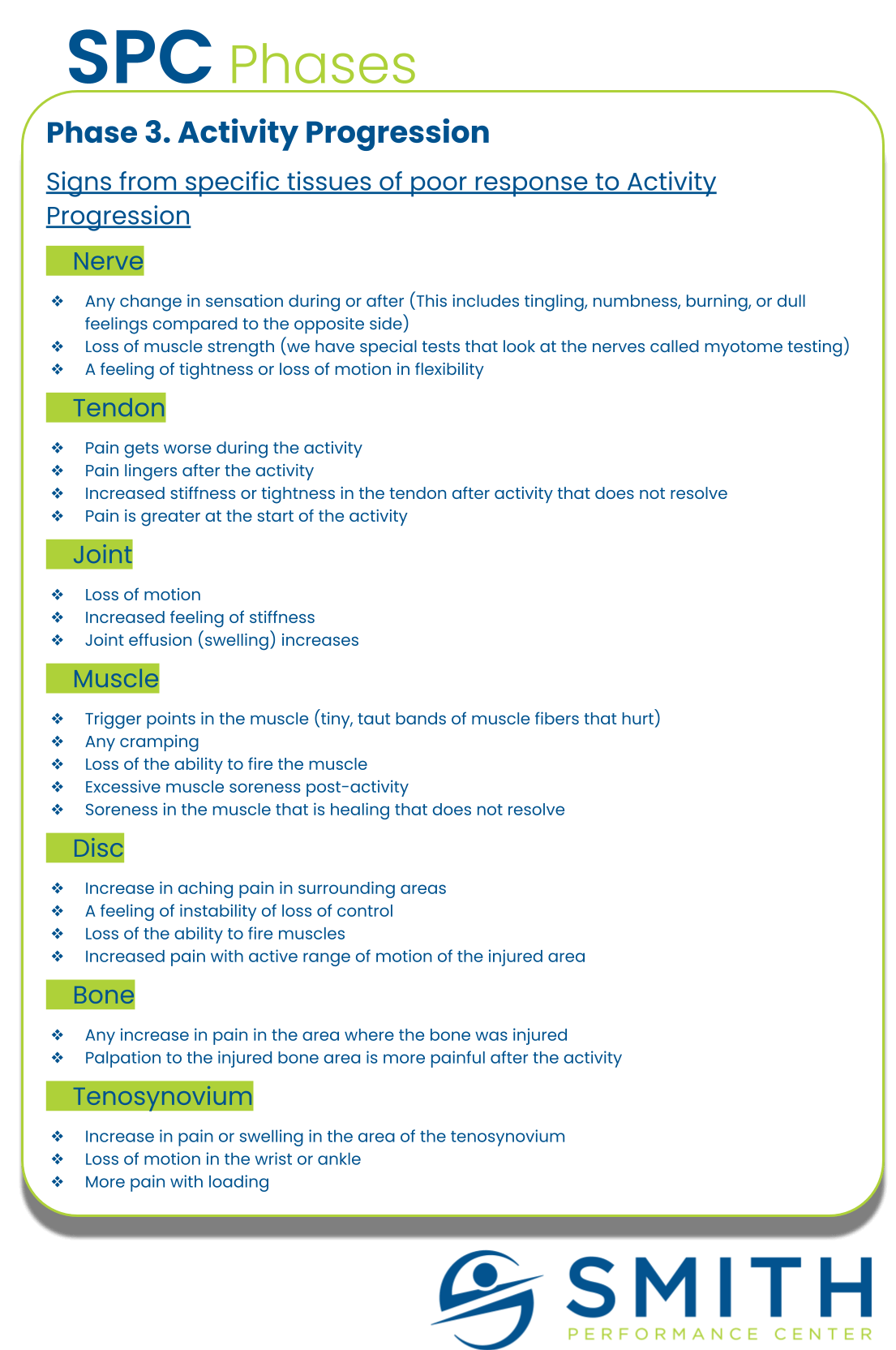
The 7 Tissues to Consider When Progressing Activity After Physical Therapy

The Rehab Standard is an SPC concept that defines when a client has a higher exercise capacity than tissue capacity.   When your tissue capacity is lower than the exercise capacity, the focus of the workout is not how hard you worked out.  It is not how much you sweat or how good of a muscle burn you got. The focus is on the healing tissue and that is was not overloaded, irritated, or provoked.  A violation of the rehab standard can present as pain after the workout or the next day, even if there was no pain during the workout. The key is to focus on tissue capacity in the exercise selection, intensity, volume and the type of tissue injured. We want to look at this last one, the type of tissue injured, in relation to activity progression following an injury. The 7 Tissues to Consider When Progressing Activity Improving

Read More »

The 5 Big Problems Facing Clients with Pain and Injury Who Want to Get Back to an Active Lifestyle

There are numerous problems facing people in living an active, healthy life, but it can be difficult to articulate the problem that needs to be solved. Let’s look at two people dealing with low back pain. One person bent over this morning to grab a pencil and now cannot stand up straight. The second person developed back pain years ago and stopped doing certain movements because of discomfort. The pain is still present daily and they use a combination of meds, massage, and chiropractic to keep big flares up away. Their problems are different despite both dealing with low back pain. The solutions are very different. The person who just hurt their back needs a diagnosis and a home plan targeting healing strategies and triggers. This may mean more frequent visits and removing anything that makes their symptoms worse. We will likely see this person a few times per week

Read More »

The Injury Types That Are Mismanaged During Activity Progression

The rehab standard is simple; the limit to your exercise is not how hard you can work out, but rather working as hard as possible without going past your tissue capacity.  Our team sees violation of the rehab standard as the most frequent cause of failure during activity progression. A client will feel great and start to progress their workouts. There is no symptoms during the exercise and often no symptoms the same day, but the next day they feel horrible.  We know that in activity progression, you need to understand the type of tissue that is healing, the specific exercise, and volume. We also need to consider the type of injury: chronic, recurrent, and acute.  Chronic Injury For chronic, we mean is has been present for a long time. When you have a chronic injury or chronic pain, there are two issues: your exercise capacity is lower because it

Read More »