
Smith Performance Center Blog
Your Trusted Physical Therapy and Strength Training Blog for Injury Rehab and Pain Management
Welcome to the physical therapy blog from Smith Performance Center—your source for expert guidance on injury recovery, pain management, strength training, and sustainable health habits. Whether you’re managing chronic pain, recovering from surgery, or building long-term fitness, our team shares actionable strategies backed by clinical experience and real-world success. Stay up to date with new posts on rehab phases, movement progression, exercise programming, and the science behind making healthcare work for you.

What are the 3 major issues in physical therapy and exercise?
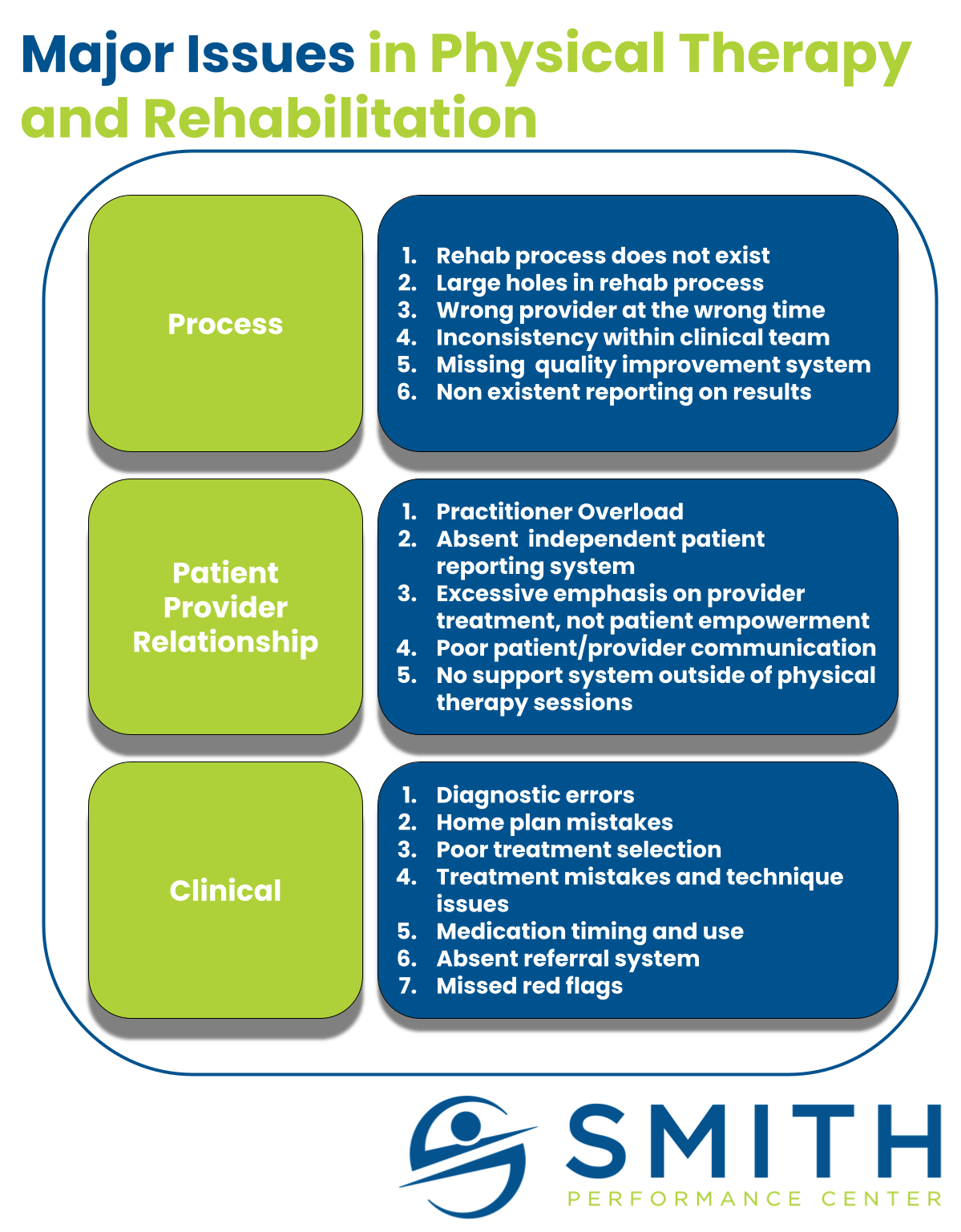
Physical therapy quality is highly inconsistent between clinicians, clinics, and companies. Numerous factors play into these discrepancies, including clinical process, management structure, payment models, clinician-patient time, use of assistants, patient load, clinician training, and business models. These issues often culminate in underwhelming rehabilitation outcomes for clients. When embarking on a rehab journey, most patients don’t anticipate these issues. As Sarah Smith, PT, DPT, and co-founder of Smith Performance Center, observes: “Many patients don’t know where to start their rehab journey, and physical therapy is often not their first choice.” Choosing a clinic that treats 25 patients daily with heavy use of assistants is vastly different from one that sees six patients daily with dedicated one-on-one time. Blending the art and the science of physical therapy
The 5 Most Useful Tools for Progressing Your Workouts After an Injury
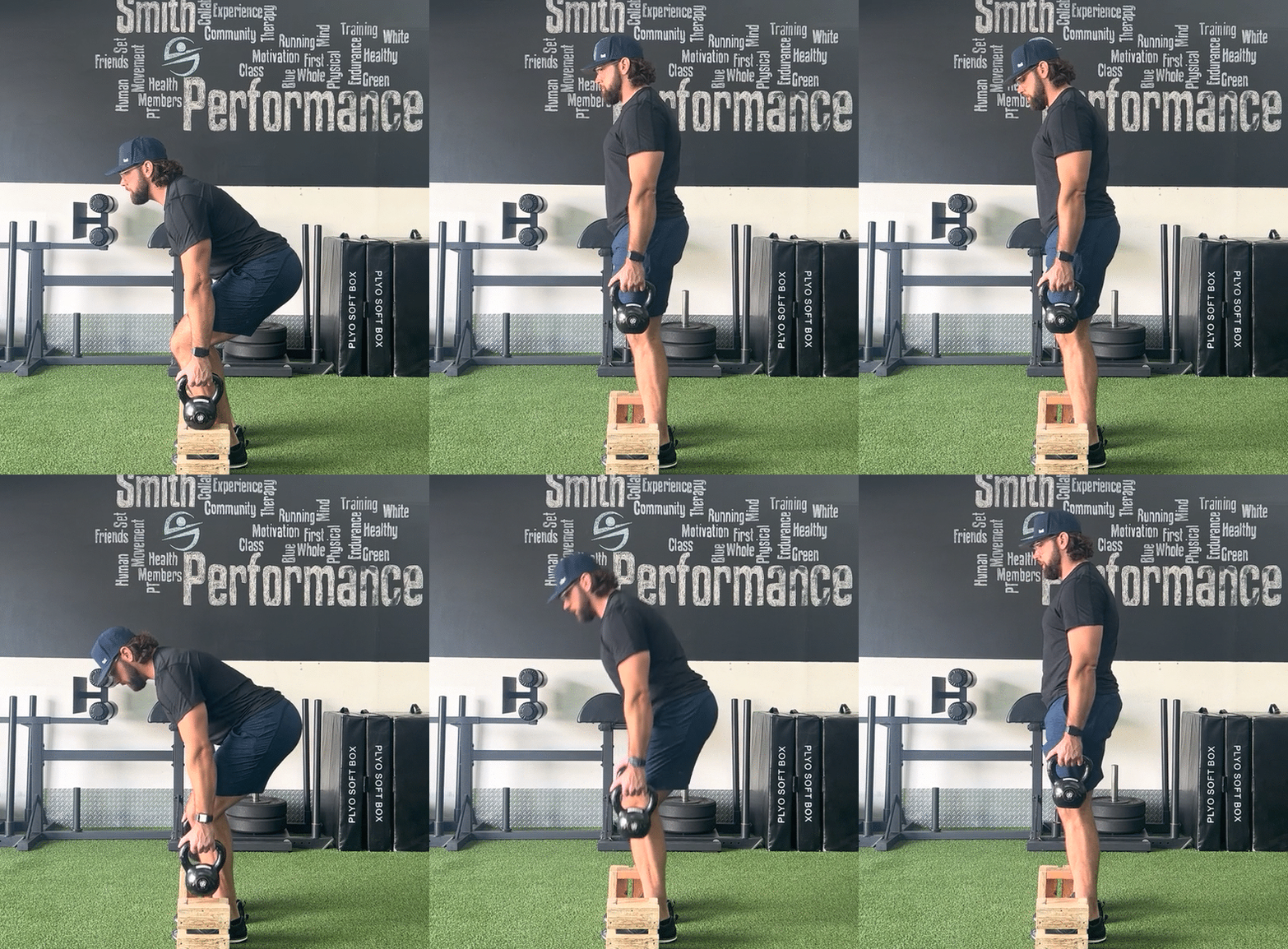
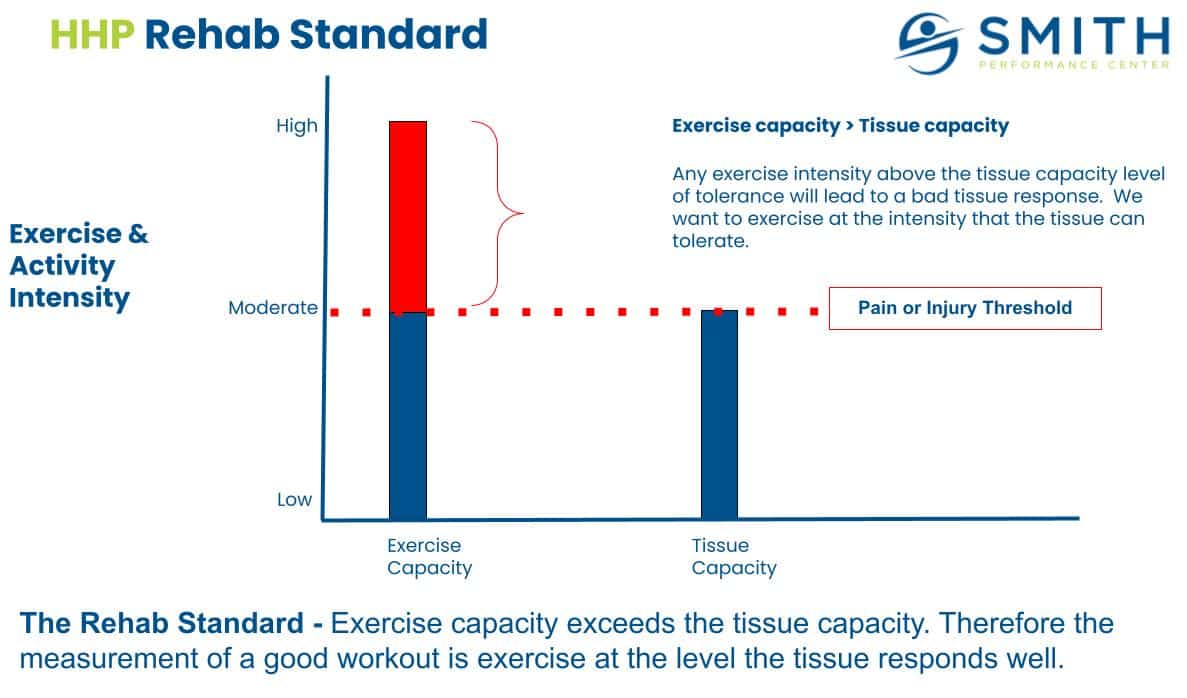
Too many fail in their effort to progress activity after an injury. You arrive at the gym feeling good but later in the day the low back soreness that has been feeling better comes back or the knee pain that seemed to be going away comes back with a vengeance after your second run. The regression happened even when the workout felt easy and pain-free at the time. Why is this happening? Why is this phase of rehab frustrating? It’s due to a fundamental mistake or what we call a violation of the rehab standard, which is training at exercise capacity, not tissue capacity. When individuals make this mistake, they start telling themselves stories like ‘I am getting too old,’ or ‘I guess I need
The 7 Tissues to Consider When Progressing Activity After Physical Therapy
The Rehab Standard is an SPC concept that defines when a client has a higher exercise capacity than tissue capacity. When your tissue capacity is lower than the exercise capacity, the focus of the workout is not how hard you worked out. It is not how much you sweat or how good of a muscle burn you got. The focus is on the healing tissue and that is was not overloaded, irritated, or provoked. A violation of the rehab standard can present as pain after the workout or the next day, even if there was no pain during the workout. The key is to focus on tissue capacity in the exercise selection, intensity, volume and the type of tissue injured. We want to look at

The 5 Big Problems Facing Clients with Pain and Injury Who Want to Get Back to an Active Lifestyle
There are numerous problems facing people in living an active, healthy life, but it can be difficult to articulate the problem that needs to be solved. Let’s look at two people dealing with low back pain. One person bent over this morning to grab a pencil and now cannot stand up straight. The second person developed back pain years ago and stopped doing certain movements because of discomfort. The pain is still present daily and they use a combination of meds, massage, and chiropractic to keep big flares up away. Their problems are different despite both dealing with low back pain. The solutions are very different. The person who just hurt their back needs a diagnosis and a home plan targeting healing strategies and triggers.

The Injury Types That Are Mismanaged During Activity Progression
The rehab standard is simple; the limit to your exercise is not how hard you can work out, but rather working as hard as possible without going past your tissue capacity. Our team sees violation of the rehab standard as the most frequent cause of failure during activity progression. A client will feel great and start to progress their workouts. There is no symptoms during the exercise and often no symptoms the same day, but the next day they feel horrible. We know that in activity progression, you need to understand the type of tissue that is healing, the specific exercise, and volume. We also need to consider the type of injury: chronic, recurrent, and acute. Chronic Injury For chronic, we mean is has been

7 Tools to overcome invisible triggers stalling your rehab progress
An invisible trigger is a problem that can stop you from fully healing. An invisible trigger is an action or activity that does not seem to be causing your injury to worsen but is actually causing your injury to remain and not heal properly. During the course of treatment, our team comes across this problem frequently when a patient will seem to stop progressing in their rehab plan. This problem presents most often during the symptom stabilization and the activity progression phases. The physical therapist will see an improvement in symptoms during a session, but then progress is lost when the patient tries to manage the symptoms on their own. During activity progression, there is often an interaction between the activity being progressed and normal

What are the 3 major issues in physical therapy and exercise?
Physical therapy quality is highly inconsistent between clinicians, clinics, and companies. Numerous factors play into these discrepancies, including clinical process, management structure, payment models, clinician-patient time, use of assistants, patient load, clinician training, and business models. These issues often culminate in underwhelming rehabilitation outcomes for clients. When embarking on a rehab journey, most patients don’t anticipate these issues. As Sarah Smith, PT, DPT, and co-founder of Smith Performance Center, observes: “Many patients don’t know where to start their rehab journey, and physical therapy is often not their first choice.” Choosing a clinic that treats 25 patients daily with heavy use of assistants is vastly different from one that sees six patients daily with dedicated one-on-one time. Blending the art and the science of physical therapy

The 5 Most Useful Tools for Progressing Your Workouts After an Injury
Too many fail in their effort to progress activity after an injury. You arrive at the gym feeling good but later in the day the low back soreness that has been feeling better comes back or the knee pain that seemed to be going away comes back with a vengeance after your second run. The regression happened even when the workout felt easy and pain-free at the time. Why is this happening? Why is this phase of rehab frustrating? It’s due to a fundamental mistake or what we call a violation of the rehab standard, which is training at exercise capacity, not tissue capacity. When individuals make this mistake, they start telling themselves stories like ‘I am getting too old,’ or ‘I guess I need

The 7 Tissues to Consider When Progressing Activity After Physical Therapy
The Rehab Standard is an SPC concept that defines when a client has a higher exercise capacity than tissue capacity. When your tissue capacity is lower than the exercise capacity, the focus of the workout is not how hard you worked out. It is not how much you sweat or how good of a muscle burn you got. The focus is on the healing tissue and that is was not overloaded, irritated, or provoked. A violation of the rehab standard can present as pain after the workout or the next day, even if there was no pain during the workout. The key is to focus on tissue capacity in the exercise selection, intensity, volume and the type of tissue injured. We want to look at

The 5 Big Problems Facing Clients with Pain and Injury Who Want to Get Back to an Active Lifestyle
There are numerous problems facing people in living an active, healthy life, but it can be difficult to articulate the problem that needs to be solved. Let’s look at two people dealing with low back pain. One person bent over this morning to grab a pencil and now cannot stand up straight. The second person developed back pain years ago and stopped doing certain movements because of discomfort. The pain is still present daily and they use a combination of meds, massage, and chiropractic to keep big flares up away. Their problems are different despite both dealing with low back pain. The solutions are very different. The person who just hurt their back needs a diagnosis and a home plan targeting healing strategies and triggers.

The Injury Types That Are Mismanaged During Activity Progression
The rehab standard is simple; the limit to your exercise is not how hard you can work out, but rather working as hard as possible without going past your tissue capacity. Our team sees violation of the rehab standard as the most frequent cause of failure during activity progression. A client will feel great and start to progress their workouts. There is no symptoms during the exercise and often no symptoms the same day, but the next day they feel horrible. We know that in activity progression, you need to understand the type of tissue that is healing, the specific exercise, and volume. We also need to consider the type of injury: chronic, recurrent, and acute. Chronic Injury For chronic, we mean is has been

7 Tools to overcome invisible triggers stalling your rehab progress
An invisible trigger is a problem that can stop you from fully healing. An invisible trigger is an action or activity that does not seem to be causing your injury to worsen but is actually causing your injury to remain and not heal properly. During the course of treatment, our team comes across this problem frequently when a patient will seem to stop progressing in their rehab plan. This problem presents most often during the symptom stabilization and the activity progression phases. The physical therapist will see an improvement in symptoms during a session, but then progress is lost when the patient tries to manage the symptoms on their own. During activity progression, there is often an interaction between the activity being progressed and normal
Categories
Rehab, Training, and Real-World Health Insights
Get one email each month with practical insights on rehab, training, fatigue, and staying active for life.
No fluff.
Just thinking that helps you train smarter.