Welcome to the

SPC Archives

Find related articles and learn more about our process at SPC.

Search

Tag: home plan

Explanation of muscle tightness and why stretching may not solve stiffness

The Myth of “Muscle Tightness” And What Actually Is

Past Your Prime Podcast – Episode 53 Listen on:Spotify | Apple | Youtube “Tightness” is one of the most common complaints people describe after pain or injury. But tightness is a description, not a diagnosis. In this episode of Past Your Prime, Craig and Alex discuss why the term “tightness” often causes confusion and why stretching is not always the solution people think it is. Using examples like hamstring tightness, the conversation breaks down what may actually be happening in the body. Instead of assuming muscles are simply short or inflexible, this episode explores the different systems that influence mobility and movement. Topics include: If you have ever felt stiff, tight, or restricted and wondered what your body is actually telling you, this episode explains why stretching alone often misses the real problem. If you enjoy this episode, you can learn more about the causes of tightness in our article “Why Your Hamstrings Always
Read More »
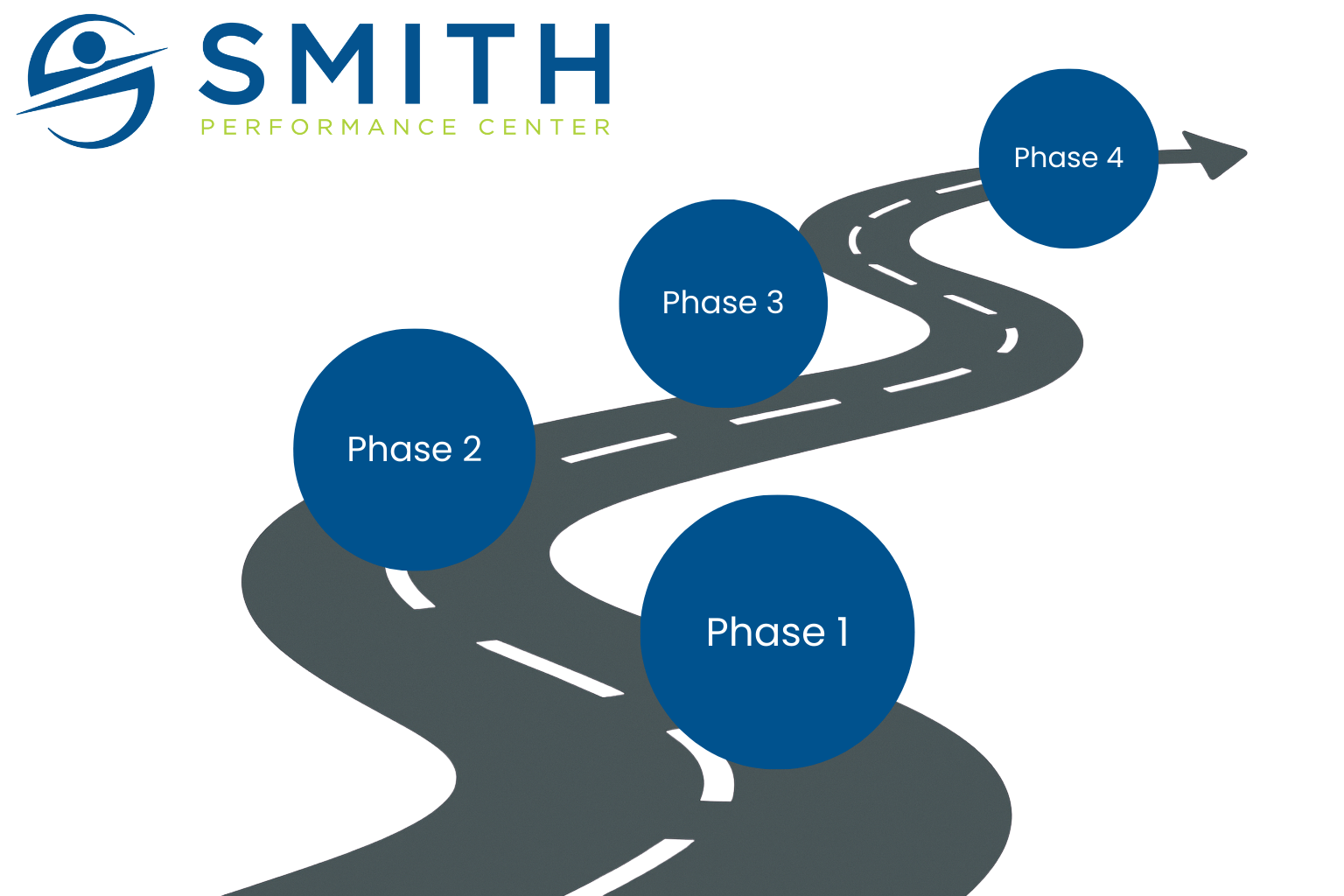
Illustration of a winding roadmap with milestones labeled Phase 1, Phase 2, Phase 3, and Beyond, symbolizing recovery progression in the SPC home plan.

What Is a Home Plan at Smith Performance Center?

At Smith Performance Center, the home plan is a central feature of your rehabilitation experience. If you’ve worked with physical therapy in the past, you’ve probably been given a list of exercises to do on your own, most often called a ther-ex list or home exercise plan. Our approach is different. The purpose of your home plan isn’t just to give you something to do between visits — it’s to improve your tissue capacity and help you progress safely toward your goals. And the strategy often changes as you move from Phase 1, where we identify and outline what is causing your pain, to Phase 2, where you learn to manage your symptoms, to Phase 3, where we work to build your tissue capacity and progress your activity. Learn more about this process in our article “What are the phases at Smith Performance Center?“ Why the Home Plan Matters To

Read More »
A person in a teal shirt holds a clipboard and pen, representing a physical therapy session. Overlaid text reads: "Why your physical therapy home exercise program is not working (And What to Do About It)."

Why Your Physical Therapy Home Exercise Program Isn’t Working

Not all physical therapy home exercise programs are created equal. But the reason why your physical therapy home exercise program is not working is likely due to more than one reason. Your home plan should guide your recovery with clear, effective exercises tailored to your needs, but your therapist might be overwhelmed with clients, relying too much on assistants, or emphasizing passive treatments instead of empowering you with actionable strategies. Whatever the cause, a poorly designed home plan can stall your progress—or even make your symptoms worse. We see each of these situations when reviewing the histories of new clients with long-term injuries. The home plan is a critical component of your rehab plan in physical therapy. Our team regularly helps new clients who have been doing the same home plan from physical therapy for years which is not helping. This includes obvious mistakes like stretching an irritated nerve, overloading

Read More »