Welcome to the

SPC Archives

Find related articles and learn more about our process at SPC.

Search

Tag: Strategy

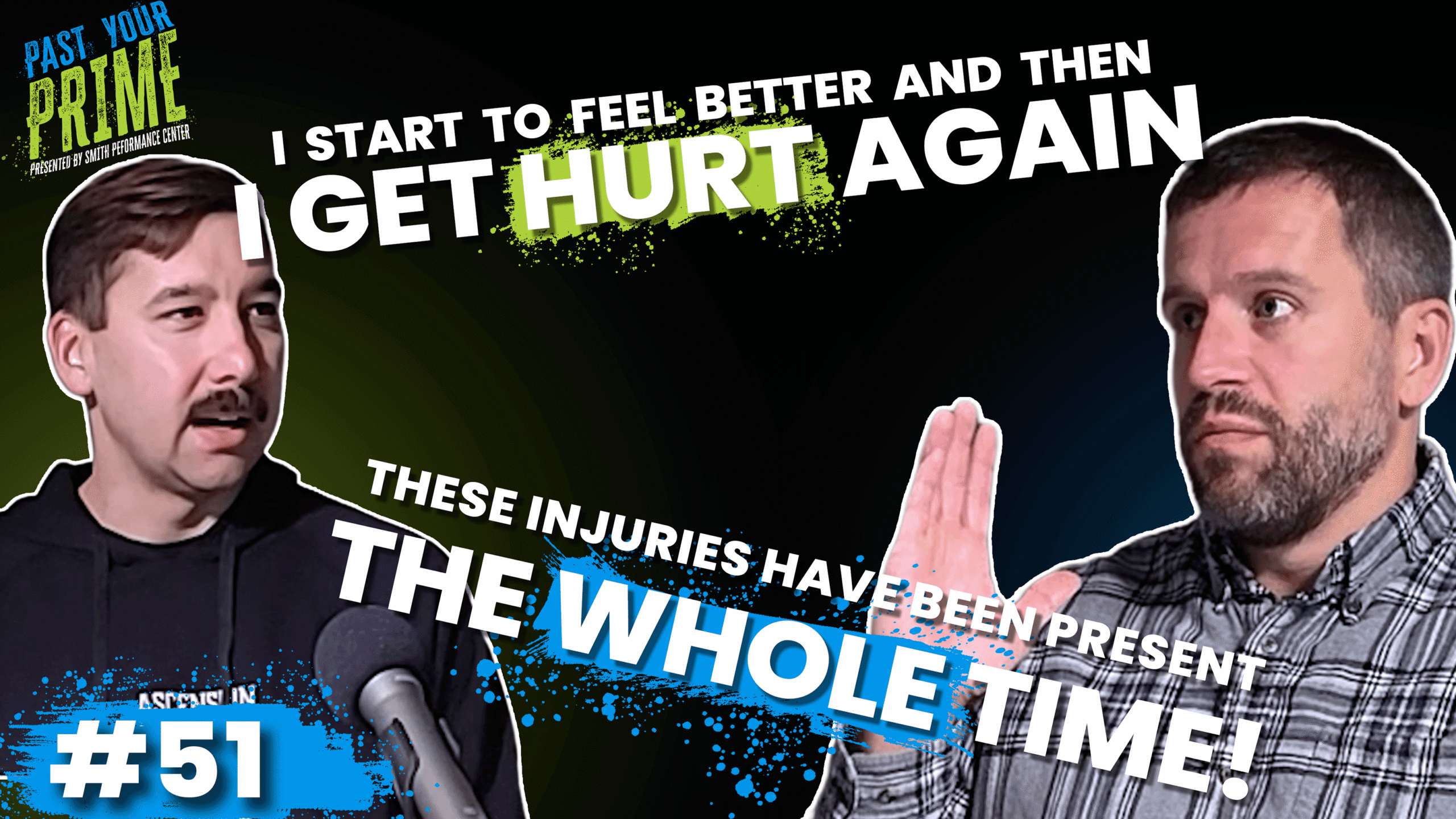
why rehab feels like chasing injuries podcast episode 51

Why Rehab Feels Like Chasing Injuries

Why does one thing finally start to feel better… and then something else decides to hurt?

It can feel like you’re chasing injuries. Like you calm one fire down and another pops up.

Is that bad rehab? Or is that actually how complex systems work?

In this episode of Past Your Prime, Craig introduces the concept of Layered Pathology, the idea that injuries build in layers, and when one layer improves, the next one becomes visible.

Read More »
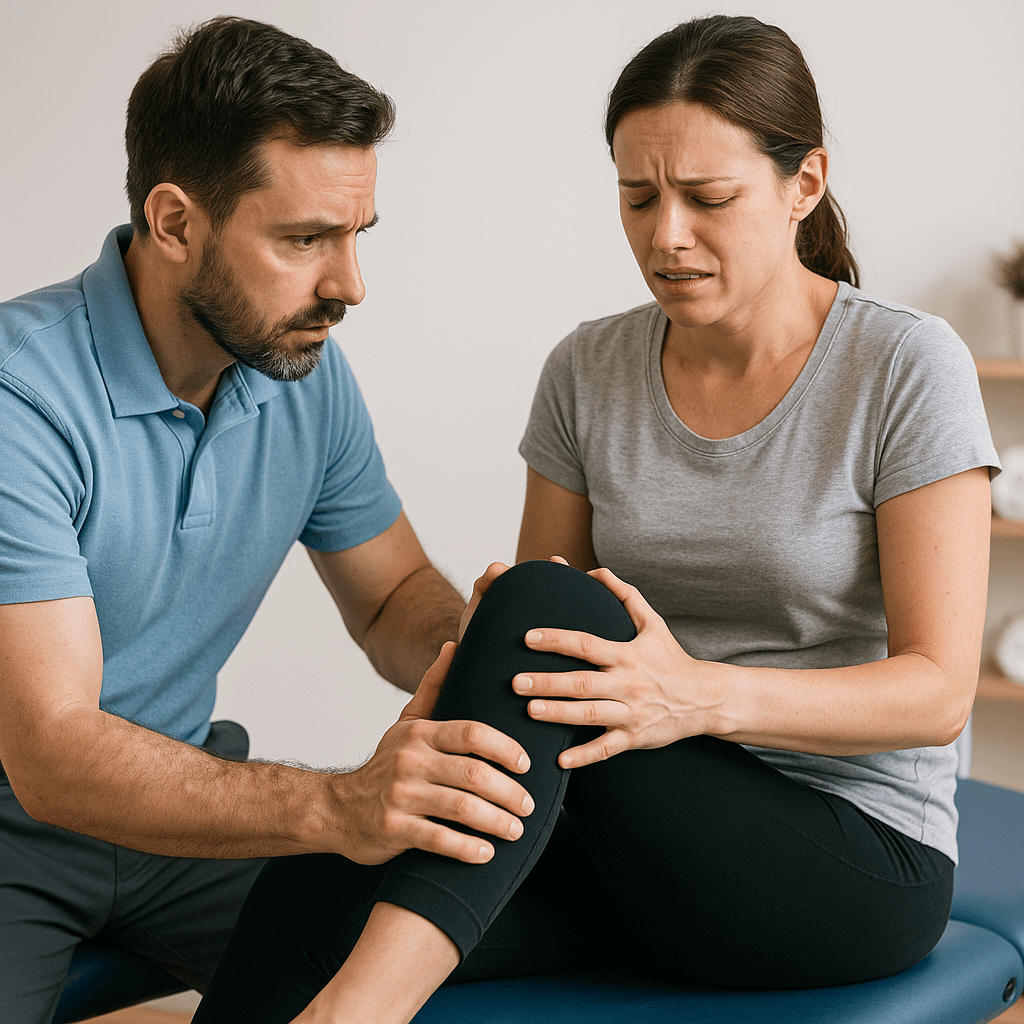
Patient experiencing a rehabilitation flare-up with physical therapist support and quote about mastering symptom management

Understanding and Managing Flare-Ups During Rehabilitation

During recovery, there comes a pivotal moment when symptoms improve, and the client feels like they’ve turned a corner. Life feels good again, and naturally, activity levels increase. This change is often unconscious or unintentional—but its consequences can be significant. A rehabilitation flare-up is defined as a return or increase in the original symptoms that led the patient to seek care. The natural reaction to a flare-up is often to question whether the real problem is being addressed. Read: the diagnosis is wrong. But this reaction can lead to a critical misstep—focusing on the wrong issue and missing an opportunity for patient empowerment. Diagnostic Errors vs. Rehabilitation Flare-Up Mismanagement Achieving the correct diagnosis involves identifying potential tissue pain generators, noting local and regional contributors, considering central modulation, and uncovering triggers. This process requires careful collection, analysis, and prediction. And there can be many reasons that diagnosis is hard, but once

Read More »
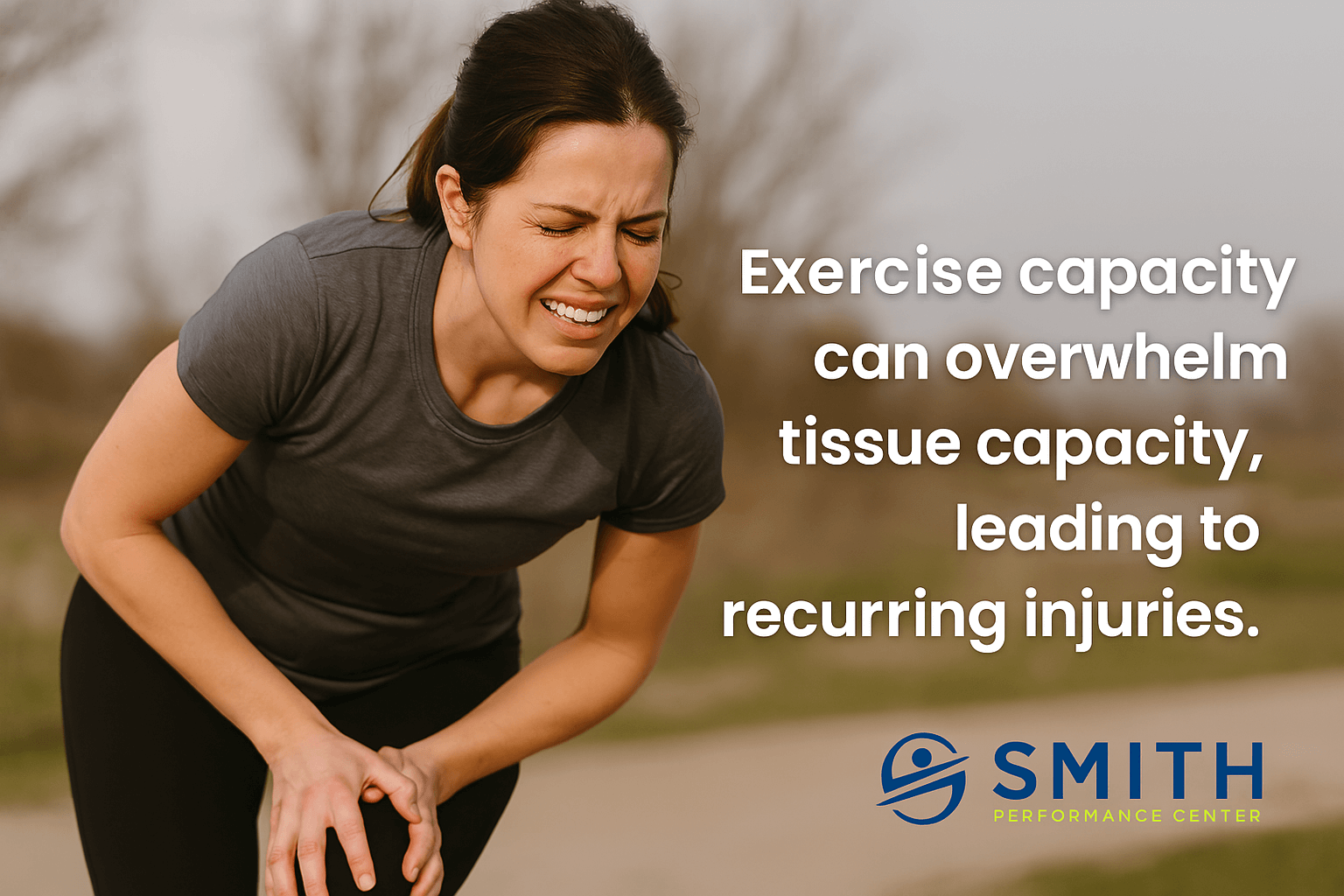
Athletic woman holding her shoulder in discomfort, with a quote emphasizing how exceeding tissue capacity through high exercise demands can lead to recurring injury from exercise.

Tissue Capacity vs. Exercise Capacity: Why Most People Miss the Mark

You’re Doing the Work—So Why Does Your Body Keep Breaking Down? You show up. You put in the effort. Whether it’s running, lifting, group fitness, or weekend hikes, you’re trying to stay active. But despite the commitment, you keep dealing with recurring injury from exercise. Pain shows up, progress stalls, and your body feels more unpredictable than it should. This isn’t about motivation. It’s about biology.The real issue is a mismatch between what you can make yourself do and what your body is built to tolerate. At Smith Performance Center, we call that gap the difference between exercise capacity and tissue capacity the rehab standard and it’s one of the most overlooked problems in rehab and training. What Is Exercise Capacity? Exercise capacity is your ability to push through effort and accumulate work over time. It’s what most people think of as “fitness.” It includes: Exercise capacity reflects what you’re

Read More »
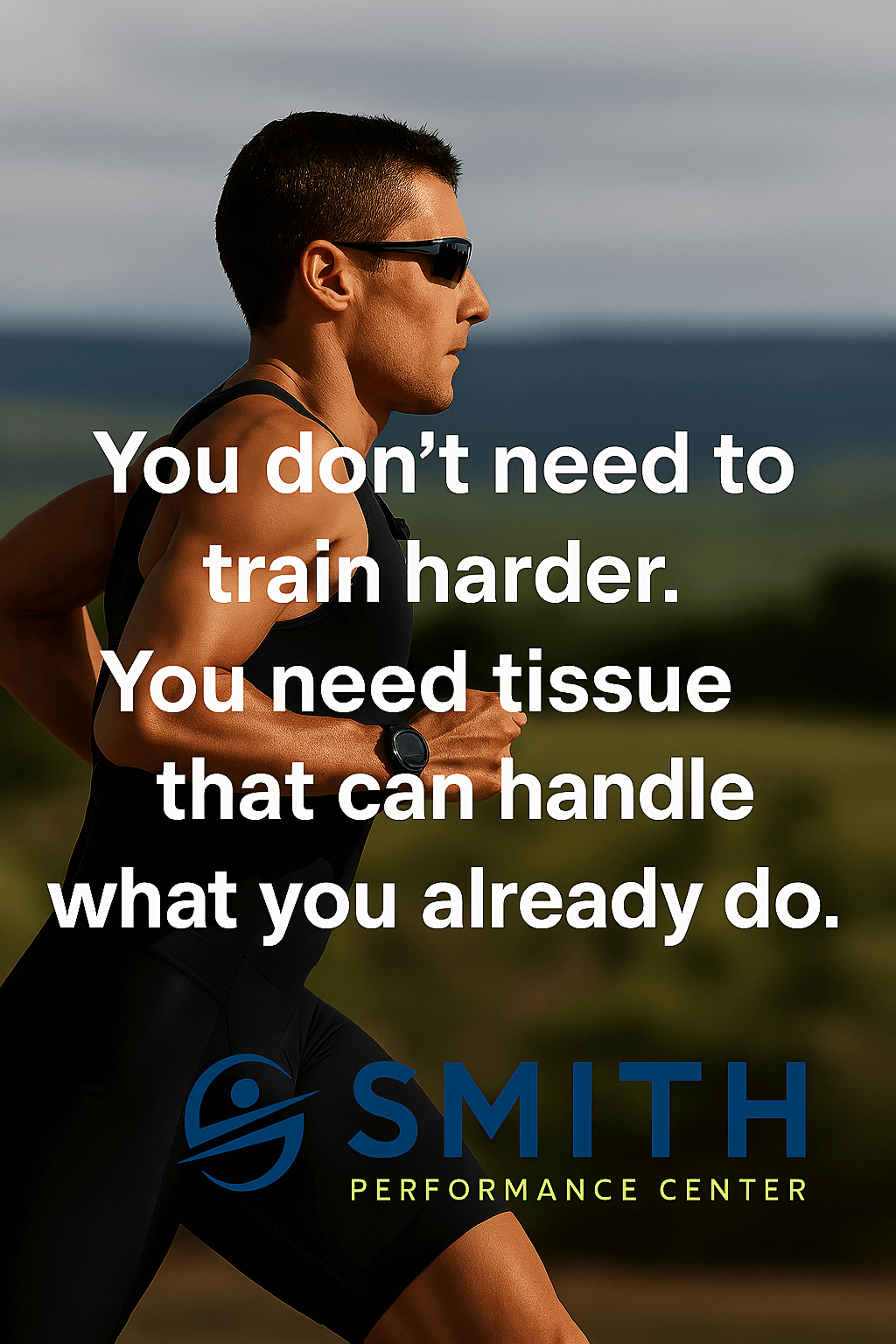
Male triathlete running outdoors with overlaid quote emphasizing tissue capacity over training volume, alongside the Smith Performance Center logo.

Triathlon Injury Rehab: How SPC Phases Prevent Setbacks

Recurring injuries derailed Alex’s triathlon training for years—until he adopted a structured, phase-based rehab approach. This case study shows how the Smith Performance Center Phase System helped him move from chronic pain to consistent performance by focusing on what most athletes overlook: building tissue capacity to match training demands.

Read More »
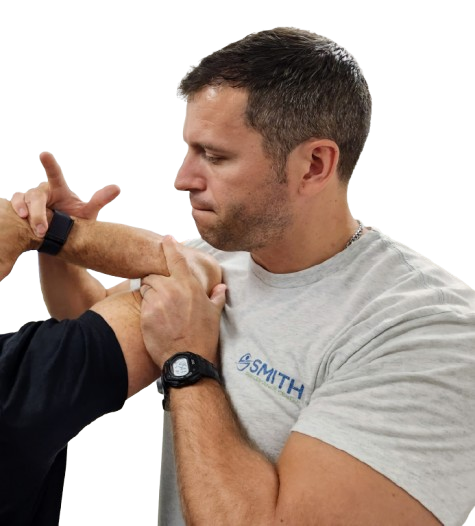
A clinician at Smith Performance Center performing manual therapy, assessing elbow range of motion. Hands-on assessment techniques help diagnose movement limitations and guide treatment

Meniscus Tears & Knee Pain: Why Rehab Needs More Than Just Cutting Out the Problem

The Evolution of Thought Around Meniscus Injuries Clinical practice is filled with successes and failures. For some reason, failures tend to linger in memory the longest and often drive the biggest changes in how we approach patient care. A significant moment in my clinical career involved a meniscus tear, knee pain, and the need for surgery. One of the most impactful shifts in my approach to knee pain, particularly in cases involving meniscus tears, came from a repeated clinical pattern: patients improving, then regressing, over and over. This frustrating cycle forced me to rethink my process and align it with a more structured framework—one that incorporates the Smith Performance Center Phases. This helped me answer the question, “Does a meniscus tear require surgery, or can it be successfully rehabbed without going under the knife?” The Traditional View: Meniscus Surgery vs. Rehab For years, meniscus tears were considered a primary cause

Read More »
Sean McConnell, a strength coach at Smith Performance Center, works closely with clients transitioning from physical therapy to strength training, ensuring safe and effective movement progression.

Breaking the Injury Doom Loop with Sean McConnell: Why the Right Support System Matters

Confidence is even more important than strength. People come in with doubt and fear of pain. If they don’t believe they can move safely, they won’t move at all. My job is to assess not just their movement, but also their psychological acceptance of movement. The best exercise is the one you can do, so we start small, monitor the response, and slowly build from there

Read More »
Alex Griffis, physical therapist, performing knee traction on a patient lying down at Smith Performance Center to improve mobility and reduce pain.

Understanding Vestibular Issues with Alex Griffis, PT, DPT

When it comes to dizziness and balance issues, few areas of physical therapy are as fascinating and misunderstood as vestibular rehabilitation. Dr. Alex Griffis, PT, DPT, sheds light on common conditions like Benign Paroxysmal Positional Vertigo (BPPV) and the surprising role of vision and proprioception in maintaining balance. With techniques like habituation training, he helps patients regain control over their symptoms. If you’ve been struggling with unexplained falls or dizziness, discover how a multi-layered approach at Smith Performance Center can help you regain confidence and improve your quality of life.

Read More »