Welcome to the

SPC Archives

Find related articles and learn more about our process at SPC.

Search

Tag: pain

Black and white photo of Kenny Sewall performing an elevated push-up at a gym station in Smith Performance Center, showcasing strength and form.

From Pain to Progress: Building an Exercise Habit After Injury

A perfect time to build the exercise habit occurs when you overcome a painful injury. At Smith Performance Center (SPC), this happens during the “activity progression” phase after stabilizing symptoms. Unlike a standard exercise routine, activity progression focuses on managing and improving tissue capacity—your body’s ability to handle physical load without pain or injury. If these terms sound unfamiliar, don’t worry. The following signs indicate you may have skipped the fundamentals of activity progression: Why Delaying Exercise Is a Mistake Many individuals delay exercise until they feel completely better. However, this approach has drawbacks: Your Path at SPC At SPC, we’ve developed a clear plan to help you build fitness while overcoming an injury. Here’s how it works: 1. Your Home Plan: Manage Symptoms and Flare-Ups The biggest hurdle to starting exercise is handling symptom increases. If daily activities cause large spikes in pain, your exercise plan must be carefully
Read More »
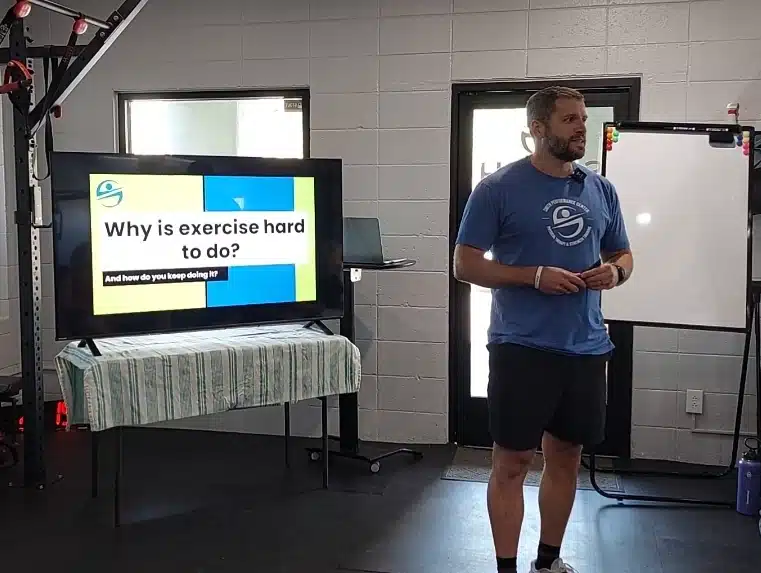
A speaker at Smith Performance Center giving a lecture on exercise barriers and habit formation. The discussion covers evolutionary mismatch, injury risks, shifting barriers, and the gap between knowledge and action in fitness adherence.

The 4 Reasons Exercise is Hard to Start and Maintain

Starting an exercise program usually begins with a detailed look at your goals and a plan to achieve them.  Showing up consistently is assumed. After decades in the health and wellness industry as a personal trainer, strength coach, exercise physiologist, and physical therapist, I’ve seen firsthand that the problem isn’t your goals, program structure, or knowledge of the importance of exercise. You already know regular exercise is crucial. Nor is the problem finding a place to work out, scheduling gym time, or getting the right equipment for home. The real issue is execution: showing up and doing the work.  Exercise is hard to start.  Exercise is hard to maintain. Why? There are four major reasons: Evolutionary Mismatch We did not evolve to exercise; we evolved to conserve calories. Our ancestors developed in an environment with limited access to calories. The body’s ability to conserve energy allowed humans to survive periods

Read More »
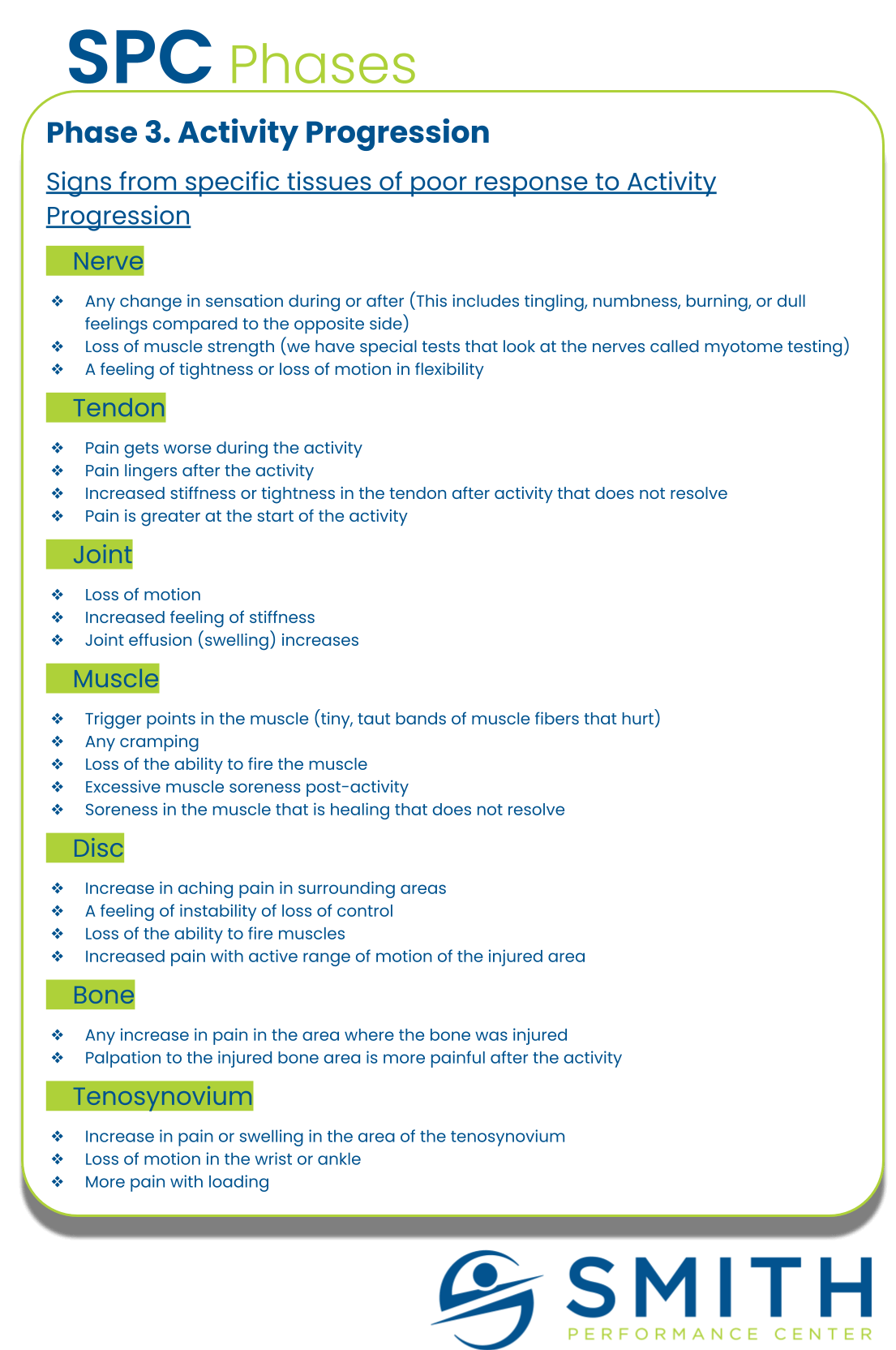
Infographic showing signs from nerves, tendons, joints, muscles, discs, bones, and tenosynovium that indicate poor response to activity progression and risk of repetitive injury when exercising.

The 10 Strategy Mistakes of Repetitive Injury When Exercising

Do you want to get back to exercise but keep on getting hurt? The merry-go-round misery of repetitive injury when exercising is a common complaint at Smith Performance Center. When someone shows up, our physical therapists listen to a series of injuries that seem to occur every time they get into a workout routine. The exerciser finishes rehab and heads back to their respective sport. The first few days go well, but inevitably the same problem comes back. In our clients’ minds, their body has lost the ability to stay healthy. They believe age is driving the problem, or the joints are shot. They think the activity they choose to do is too vigorous and must be replaced.  These are not the problem.   The cycle of repetitive injury is a strategic mistake. Why Repetitive Injuries Keep Happening When You Exercise We believe in a process called the SPC Phases. A

Read More »
A person in a teal shirt holds a clipboard and pen, representing a physical therapy session. Overlaid text reads: "Why your physical therapy home exercise program is not working (And What to Do About It)."

Why Your Physical Therapy Home Exercise Program Isn’t Working

Not all physical therapy home exercise programs are created equal. But the reason why your physical therapy home exercise program is not working is likely due to more than one reason. Your home plan should guide your recovery with clear, effective exercises tailored to your needs, but your therapist might be overwhelmed with clients, relying too much on assistants, or emphasizing passive treatments instead of empowering you with actionable strategies. Whatever the cause, a poorly designed home plan can stall your progress—or even make your symptoms worse. We see each of these situations when reviewing the histories of new clients with long-term injuries. The home plan is a critical component of your rehab plan in physical therapy. Our team regularly helps new clients who have been doing the same home plan from physical therapy for years which is not helping. This includes obvious mistakes like stretching an irritated nerve, overloading

Read More »

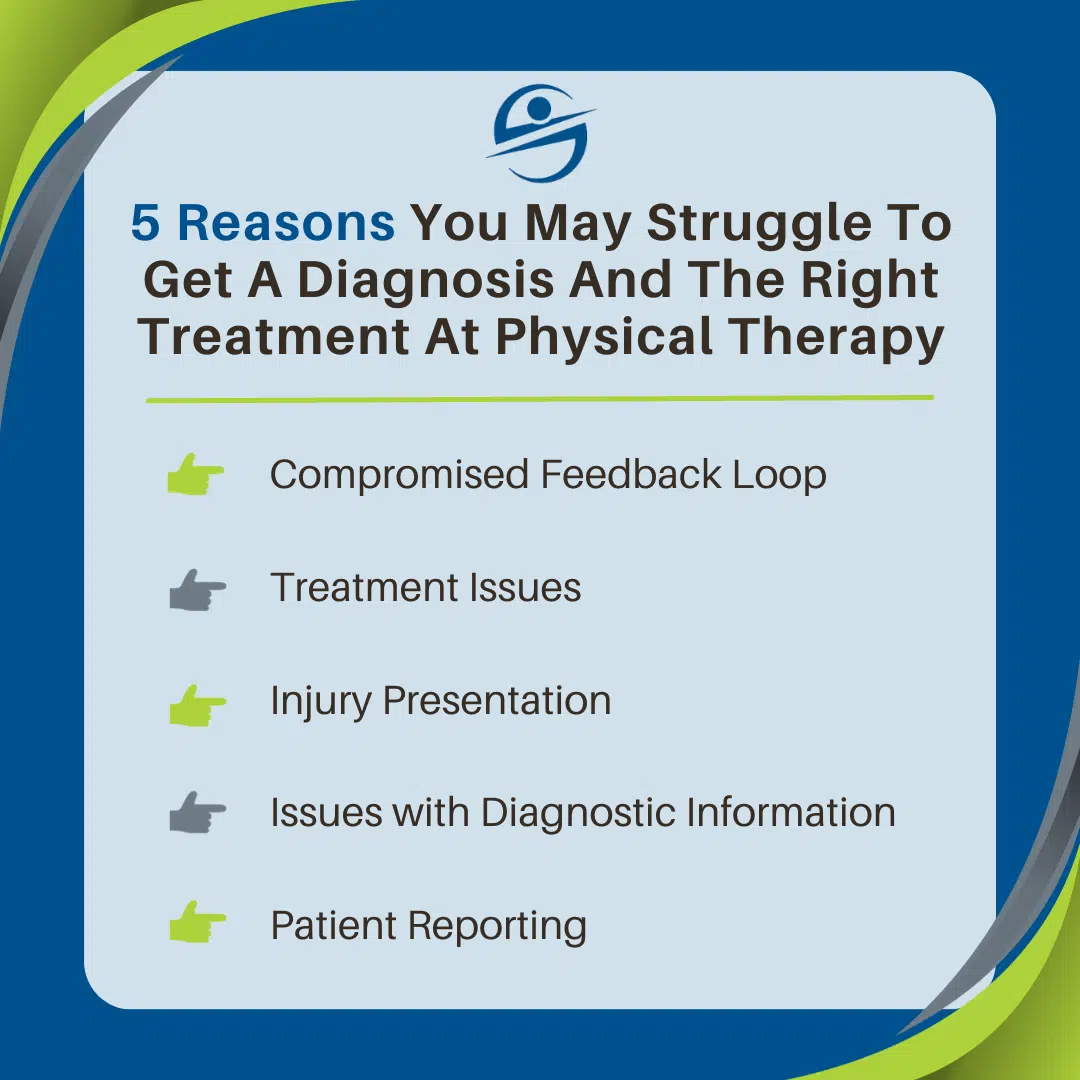
5 Reasons You May Struggle To Get A Diagnosis And The Right Treatment At Physical Therapy

Upon your arrival at Smith Performance Center, our primary goal is to comprehensively understand the source of your pain or symptoms.  Our physical therapists initiate this by gathering information through a medical history form, conducting interviews about your experiences, performing thorough examinations, creating an initial list of potential diagnoses, validating our hypotheses through treatment, and finally, devising an initial home plan. This phase in our rehabilitation process is aptly termed ‘Diagnosis and Home Plan Development’. While not a creative title, it encapsulates the process our team undertakes.  A workable diagnosis is pivotal. However, arriving at a diagnosis can be challenging due to various reasons. These complexities range from the diverse causes of pain (such as injury, inflammation, nerve-related issues, sensitization, psychogenic factors, and dysfunctional conditions) to individual-specific challenges. Patients may struggle to explain their experiences, while others may not show rapid responses to treatment due to the absence of a

Read More »
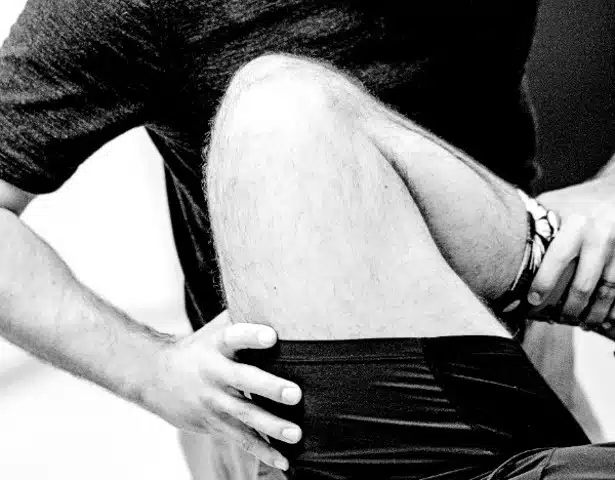
Craig Smith, PT, DPT, conducts a knee exam at Smith Performance Center, demonstrating expert physical therapy techniques in knee pain assessment, rehabilitation, and injury recovery while flexing his arm in a lighthearted moment.

Total Knee Case Study: Why You Need A Structured Rehab Process

A structured rehab process that ultimately targets a full return to activity is missing in healthcare. Patients struggling with pain are treated as if they are all the same. We believe there are common, big problems to address, but there is a high degree of uncertainty with every patient presentation. Even when a patient has the same diagnosis they can have different triggers, different contributing factors, different behaviors, and drastically different needs in the rehab process. This is true when patients have the same surgery by the same surgeon.   Let me use an example with a straightforward rehab plan; post-total knee replacement.   The Painful Total Knee Replacement Peter Pain had a total knee replacement.  He has always been active and handles pain well but this replacement has been horrible. First, he fell behind on medication post-surgery because he hated the way the drugs made his stomach feel. The second day

Read More »

The Injury Types That Are Mismanaged During Activity Progression

The rehab standard is simple; the limit to your exercise is not how hard you can work out, but rather working as hard as possible without going past your tissue capacity.  Our team sees violation of the rehab standard as the most frequent cause of failure during activity progression. A client will feel great and start to progress their workouts. There is no symptoms during the exercise and often no symptoms the same day, but the next day they feel horrible.  We know that in activity progression, you need to understand the type of tissue that is healing, the specific exercise, and volume. We also need to consider the type of injury: chronic, recurrent, and acute.  Chronic Injury For chronic, we mean is has been present for a long time. When you have a chronic injury or chronic pain, there are two issues: your exercise capacity is lower because it

Read More »

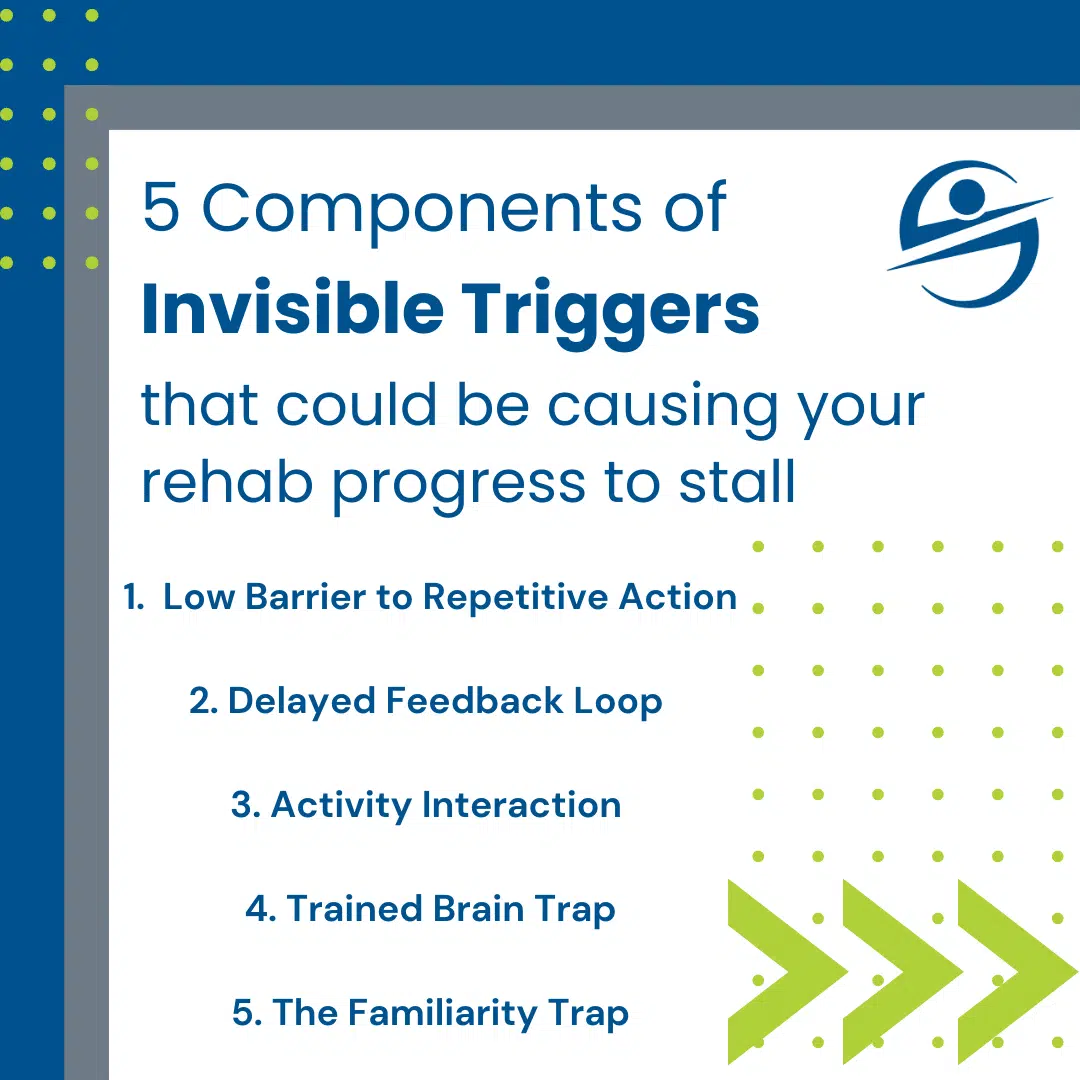
The 5 Components of Invisible Triggers That Cause Your Rehab Progress to Stall

You keep getting close to feeling good but then fall back into an injury because of a common, but often unrecognized issue – invisible triggers. An invisible trigger is an action or activity that does not seem to be causing your injury to worsen but is actually causing your injury to remain and not heal. If you slammed your finger into a door, you would know the door caused your pain.  Continuing to slam your finger in the door will cause the finger pain to remain. In contrast, an invisible trigger is not as clear as slamming your finger in a door. Patients have an easier time eliminating obvious triggers. This does not happen with invisible triggers. An example would be low back pain triggered by an interaction between two activities: running followed by a bout of sitting. When we investigate running by itself, there is no problem. We repeat

Read More »

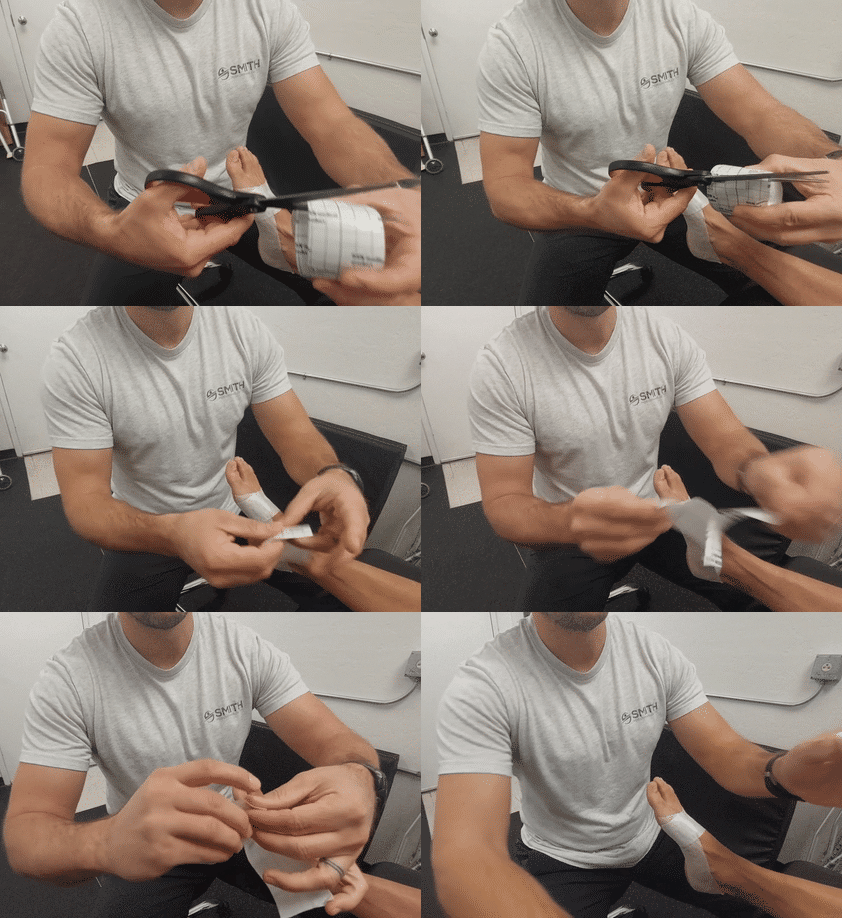
The Modified Low Dye

A physical therapy band-aid for foot pain during running Running-related injuries are commonly seen for physical therapy at Smith Performance Center. Unlike some of the advice, you may hear, stopping can prolong the problem.  Rest does not automatically equal recovery or resolution of an injury.  A nice tool to consider learning is the modified low dye.  It can help to reduce foot and lower leg pain while allowing you to continue training. Where is it from? I learned about the modified low dye from Dr. Tom McPoil.  He is faculty at Regis University and was previously faculty at Northern Arizona.  He is an expert on the foot and wrote an article on tissue stress theory that still impacts my practice today.  The purpose of the modified low dye in a physical therapy program is to limit stresses to the tissue of the lower leg and foot to allow desensitization. In

Read More »
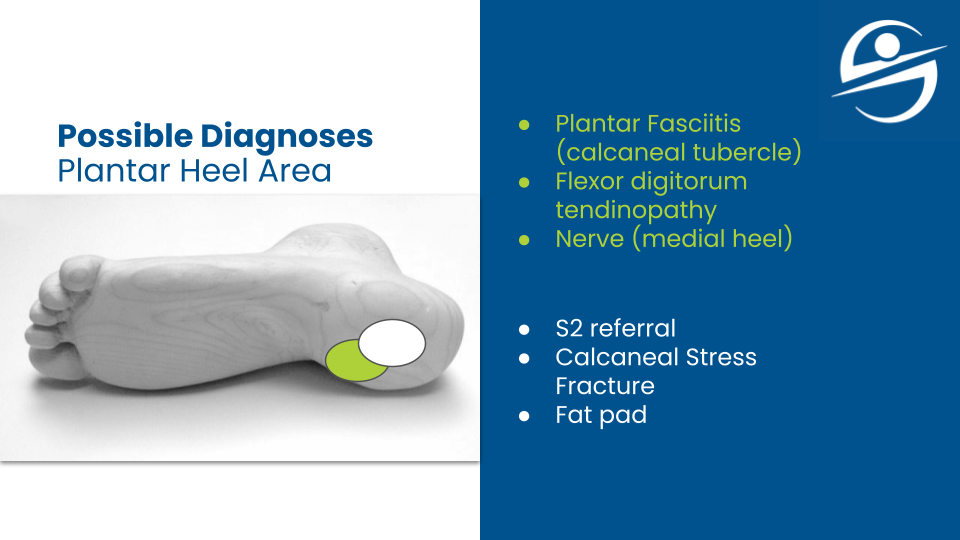
diagram showing heel pain in Tucson caused by different structures in the foot including the plantar fascia and flexor digitorum brevis

Flexor Digitorum Brevis Pain: 7 Signs Your Heel Pain Isn’t Plantar Fasciitis

If you’re dealing with heel pain in Tucson that hasn’t improved despite treatment for plantar fasciitis, you’re not alone. At Smith Performance Center, we often see people who’ve tried injections, stretching, shoe inserts, and ice bottles—yet their heel still hurts. In many of these cases, the real problem isn’t the plantar fascia at all, but a muscle on the bottom of the foot called the flexor digitorum brevis. You wake up, swing your legs to the edge of the bed, and… hesitate. You know this is going to hurt. The good foot moves to the ground first—you learned from that mistake a month ago. You brace and put down the other foot, the ungrateful one that will not get better despite the trip to the podiatrist, the injection, physical therapy, the shoe inserts, the ice bottle massage, and the stretching exercises. The foot touches down. It’s not so bad, you

Read More »